Showing posts with label Ban Hin Lee Bank. Show all posts

Sunday, 18 January 2026

Demolition accident

In 2021 when I was working on 10,000 Prosperities, the book on Ban Hin Lee Bank, there was one minor incident I felt unnecessary to include at the time. It seemed a diversion from the main story. Looking at it again now, I think it fits rather well as an addendum to the bank’s history.

By the middle of 1936, Beach Street was changing. Numbers 41 to 47, old shophouses that had long done unremarkable business along that stretch of road, were coming down to make way for something newer and larger: a purpose-built home for Ban Hin Lee Bank. The land belonged to Yeap Chor Ee. The bank itself was operating just a few metres up the road, from a modest building at the junction of Beach Street and Market Street, which he also owned. For a newly incorporated bank seeking recognition in a colonial port city, modesty was no longer enough.

What Yeap wanted was an imposing building that rivalled European-owned buildings and, just as importantly, assure his Chinese customers of merchants and traders that his was a bank that was strong, dependable and reliable. Perhaps he had in mind the Chartered Bank or the Hongkong and Shanghai Bank buildings further down the road. In any case, he envisaged a structure built along classical lines, one that would place Ban Hin Lee visually among the established pillars of finance on Beach Street.

Demolition began sometime in June. Red flags were strung along drains and five-footways, the old and familiar signals that had long served as warnings to passers-by. What were missing, at least at first, were proper hoardings to separate the site from the street and, more importantly, a licence from the municipal authorities permitting the buildings to be taken down. On 29 June, those omissions turned fatal.

That afternoon, Sikandar, a 12-year-old Indian boy, was carrying coffee from a shop in China Street to a money-changer who operated from the five-footway along Beach Street. It was something he did regularly. This time, he never returned. As part of No. 47 collapsed, bricks and tiles fell into the public way. Sikandar was struck and badly injured. By the time help arrived, it was too late.

His death set off a chain of proceedings that stretched over several months. In August, the coroner, HAL Luckham, found that the boy’s death was an accident involving contributory negligence on several sides. A workman might have acted negligently, but there was no definite evidence. The contractor, Anamalai Chettiar, should be prosecuted. The liability of the owner was less clear. He also noted that the money-changer had remained under a building he knew was being demolished.

The contractor’s case was heard first. Anamalai Chettiar was charged with failing to take proper precautions to protect human life. Witnesses testified that rubble had been falling onto the road, that the old houses were already unsafe and that demolition had begun without either a licence or protective hoardings. He was eventually found guilty and fined $25.

Running alongside this was a trickier question: who was actually responsible for the site? Yeap Chor Ee had sold the materials from the old houses to the contractor under a written agreement. The contractor was to provide the labour, insure his own workers and clear the site within a month. From Yeap’s point of view, this was a simple sale. Once the agreement was signed, the buildings, and the risks that came with them, were no longer his concern.

The Municipality disagreed and summonses were issued for failing to put up proper hoardings and starting demolition without a licence. The case drifted back and forth in the Police Court, often stalled by technical legal arguments that seemed to sideline the fact that a boy had been crushed to death on Beach Street.

When the matter finally came fully before the court in November, everything came down to how the law defined a few seemingly simple words. Under the Ordinance, who counted as the “owner”? Did responsibility rest on legal ownership, physical control or intention? And could someone be prosecuted for failing to put up hoardings when, without a licence, he was not legally allowed to erect them in the first place?

The Municipality’s lawyer argued that Yeap Chor Ee had intended the buildings to be demolished, that he ultimately remained in control and that duties meant to protect the public could not simply be passed on by contract. The defence replied that this was not an employment arrangement but a sale of materials, that the contractor was in possession and that where the law meant to impose responsibility on owners, it said so clearly.

When judgment was delivered just before the end of the year, it found that Yeap Chor Ee was guilty of commencing demolition without first obtaining a licence, and he was fined $200. An application for a stay pending appeal was granted, but the point had been made.

Here, my account ends as I could find no further details of the accident or the subsequent court proceedings. After Ban Hin Lee Bank relocated to its new premises some time in 1937, registered as 43 Beach Street, the final act came in January 1940 when Yeap Chor Ee transferred ownership of the property to the bank for the sum of Straits Dollars $55,000.

Sources for this story:
Pinang Gazette and Straits Chronicle, 10 September 1936
Pinang Gazette and Straits Chronicle, 30 October 1936
Pinang Gazette and Straits Chronicle, 19 November 1936
Pinang Gazette and Straits Chronicle, 20 November 1936
Pinang Gazette and Straits Chronicle, 30 December 1936

#banhinlee #bhlbank #bhlb #yeapchoree


Thursday, 11 December 2025

Till next year

We came home just in time to join our former bank colleagues for a meal last Tuesday. Our final regular meal meet-ups on the mainland are getting more popular as this time around, we managed to rope in 20 people. This will be our final get-together for 2025, and everyone is definitely looking forward to the next year to restart the camaraderie sessions.

Seated: Seak Chin, Pak Chun, Kay Liang, Heng Boo, Hiong Wah, myself and Saw See; standing: Kok Hun, Swee Phew, Hi Keng, Seong Lye, Khye Wai, Michael, Chong Chia, Fook Chin, Kok Kheong, Hock Seng, Soon Huat, Han Ming and Yuen Chee.


Thursday, 13 November 2025

Red packet design

I was rummaging through my clothes drawer recently and came across an old angpow — a red packet my mother had given me one Chinese New Year in the early 1980s, certainly before 1985. Back then, this design felt as modern as things could get. Businesses, including Ban Hin Lee Bank, were still rather traditional in their outlook, and the angpow rarely strayed from its standard four-by-two-inch size. It wasn’t until the turn of the millennium that banks began experimenting with bolder designs and shapes. Since then, the humble red packet has evolved into something of a collector’s item, as financial institutions compete to outdo one another in creativity and style.

Friday, 29 August 2025

Talk-cock lunch

Saw See and I missed the last talk-cock gathering of ex-BHLBank cronies in June because we were away on a semi-pilgrimage holiday in Nepal. So when word came that the latest lunch session would be held this month, I made sure to keep our calendar clear. After all, how often do we really meet in person? Whatsapp and other social media may keep us connected, but nothing replaces face-to-face banter and the warmth of old friendships.

Let me be clear, these talk-cock sessions among us former Ban Hin Lee Bank staff have nothing to do with any large-scale reunions aimed at drawing in the masses. Far from it. We are simply a bunch of old colleagues from the mainland who enjoy catching up, though lately we’ve been joined by a small group of islanders as well. I suppose the fact that they are willing to cross the Penang Bridge says something about the lack of such opportunities on the island. For now, we mainlanders seem to be the ones keeping the BHLB flame alive. Hopefully, others will take the cue and start their own little circles too. The more, the merrier, in my opinion.

So, coming back to yesterday’s session, the turnout of 16 was heartening. Our surprise guest was Loo Ee, and it was a joy to see him back on his feet after a minor stroke had left his lower limbs a little weak. His mind, though, remains sharp, and he recognised everyone at the table.

Moments like these remind me why we keep showing up. It isn’t for anything grand, but for the simple comfort of old friends and familiar stories. As long as we can still sit around a table, trade jokes and laugh at ourselves, the BHLB spirit will carry on. And we're already looking forward to the next one. Two months from now, maybe?

The Gang of 16 comprised (standing, left to right) Swee Phew, Soo Chin, Fook Chin, Pak Chun, Hock Seng, Seong Lye, Soon Huat, Chong Chia, Yuen Chee, Khye Wye and I, and (seated, left to right) Heng Boo, Kay Liang, Loo Ee, Seak Chin and Saw See


Thursday, 24 July 2025

Early Internet days

I’ve mentioned elsewhere on this blog that I signed up for a Jaring account sometime in 1992 or 1993, but I hadn’t been able to pin down the exact year. It was all too long ago, and I’d kept no written record. So unlike me! But then, just a few days ago, I stumbled upon an old story I’d written for my chess column in The Star, dated 28 December 1995. In that piece, I had casually remarked that it was “now close to two years since I began surfing the Net.” That line helped jog my memory: I must have applied for my Jaring account sometime in 1993, and the informal North Malaysia Internet Society (NOMIS) came into being a year later.

Early 1993 was also when I began reconnecting with some of my old schoolmates. One of them told me he was using the computer network at the University of Science Malaysia to access newsgroups and communicate with people abroad. That fascinated me. I’d already been exposed to the idea of long-distance data transmission while working at Ban Hin Lee Bank in the mid-1980s. Back then, I was helping to set up the ATM Centre. Though I wasn’t a techie, sitting through meetings with programmers and system analysts gave me a decent grasp of how data could travel through telephone lines. We were working on computerising bank services as far back as 1983, and I was familiar with the idea of sending strings of information down a wire.

Around that same time, a colleague had passed me a copy of The Cuckoo’s Egg by Clifford Stoll, a thrilling account of how a hacker from across the world was infiltrating American university networks. That book made a lasting impression. So when my friend told me that he could send emails and participate in USENET discussions simply by having his desktop computer dial a local number into the university system through a modem, I was intrigued.

Not long after, he handed me an application form for Jaring, which was then operated by MIMOS. I was excited, but applying wasn’t as straightforward as it sounds. I needed approval from someone at the bank. Trust MIMOS to include that layer of bureaucratic approval, even for private individuals like me! So I approached my Senior Manager, prepared for a round of puzzled questions. Back in 1993, the Internet was practically unknown to 99.99 percent of Malaysians. But after some explanation, he signed off on my application. Phew!

The timing turned out to be fortunate. As secretary of the Penang Chess Association, I was due to accompany our team to the annual Merdeka Team Championships in Kuala Lumpur. While they competed, I submitted my form to MIMOS, along with the RM350 fee: RM300 for the annual dial-up subscription, and RM50 for processing. A few weeks later, my Jaring account came through. I was user number 321-5, the "5" here being the check digit. At that time, there were fewer than 350 Internet users in the entire country. I suppose that made me something of a pioneer.

My first modem was a borrowed, portable unit that plugged into the back of the desktop and ran at a sluggish 300bps. Eventually, I bought a more decent internal card that could do 14.4kbps. I still remember the sound of the modem connecting—the chirps, whines and crackles, all signalling that I was about to tap into the wider world. It was painfully slow by today’s standards. Browsing the worldwide web tested patience, and I learned to do more with less. But even at that speed, it opened up a new world right from my home.

Telekom Malaysia charged 13 sen per local call back then, regardless of duration. Later, they switched to four sen per minute, but Jaring negotiated a special 1511 dial-up number at just 1.5 sen per minute. Telekom eventually launched its own TM Net service in 1996 via the 1515 number.

With my new account, I immediately began exploring the Internet for chess-related content for my newspaper column. I started following international discussions, made contacts like Mark Crowther from the UK and Sam Sloan from the US, and pulled in material that otherwise would have taken weeks to arrive by post, if at all.

Then in February 1994, shortly after Chinese New Year, a group of local Internet enthusiasts gathered at the YMCA in Penang. That meeting led to the formation of NOMIS. We came from different backgrounds but shared the same curiosity and excitement. For several years, NOMIS was invited to computer fairs in Penang to demonstrate how to get online. We gave talks, set up booths, showed people how the web worked, and most of them were seeing it for the first time.

Looking back now, those really were the good old days of the Internet in Malaysia. We were explorers, figuring things out together, one dial-up connection at a time. The Internet is now so commonplace that we take it for granted, but there was a time, not that long ago, when the idea of communicating instantly with someone on the other side of the world felt nothing short of magical.


Thursday, 28 November 2024

ITD again, 24 years later

Over the past 24 years, there have been five or six reunions of the former staff of the now-defunct Ban Hin Lee Bank. I can’t quite recall the exact number, but every time, the gatherings drew at least 200 ex-colleagues, led by the bank's former directors and senior management. Each reunion has been a joyful affair, filled with laughter, nostalgia, and camaraderie. The most recent of these large-scale reunions took place in August 2023, which would have marked the bank’s 88th anniversary.

This month, however, there was a different sort of reunion—one exclusively for the former inmates of the Information Technology Division. I use the term "inmates" lightheartedly, of course! As luck would have it, I found myself right in the midst of this nostalgic gathering. The Systems and Quality Control Department, of which I was a proud member, was part of the IT Division, and there was no way I could miss this chance to reconnect with old friends and colleagues. In fact, I even skipped my nephew’s wedding eve function to attend the IT Division Reunion at the Mercure Hotel in Tanjong Bungah.

By the last count, nearly 90 former colleagues were present, some accompanied by their spouses, and a few travelling from as far afield as Singapore and Australia to attend. The evening was filled with vibrant conversations as we reminisced about the good old days, exchanged updates on our lives—everyone had grown older but perhaps not very much wiser, and relived fond memories. The event culminated in the inevitable group photographs—an enduring tradition at such reunions, capturing the spirit of togetherness that still binds us all despite all the years apart. Thank you to Ho Sin Kheong and the rest of the organising team!

I brought along some copies of my book on Ban Hin Lee Bank, Ten Thousand Prosperities, and gave away a copy as a lucky draw prize.


Monday, 9 September 2024

Noisy fellas

We were creating ruckus at the restaurant but were pretty oblivious to the fact. When a bunch of old colleagues get together, regardless of whether it had only been two months since the last lunch meet-up or whether we continue to be in touch almost daily via social media, it is an occasion to be jolly and talk in person as if we haven't seen one another for years! So it was such when 18 of us from our Ban Hin Lee Bank days met for lunch at a restaurant in Chai Leng Park. 

We should have created enough din to bring an attap house down and luckily, the restaurant's was a sturdy brick house. Nevertheless, the noise we created in the establishment had their other diners looking uncomfortably in our direction as they finished their food as quickly as possible before disappearing. But we didn't care, of course. And neither did the restaurant's proprietor care. If fact, he even helped us to take our group picture at the end of the meal. Or maybe, he wanted to get rid of us as quickly as possible? Doesn't matter, we all had a spiffy good time....

Seated, left to right: Kay Liang, Hoing Wah, Yuen Chee, Heng Boo and Fook Chin; first row: Kok Hun, Siak Chin, Khye Wai, myself, Saw See and Kok Kheong; second row: Seong Lye, Hock Seng, Chong Chia, Soon Huat, Soo Chin, Pak Chun and Swee Piew

.

Monday, 2 September 2024

Early minutes

Something intriguing happened recently. On the 29th of July, Stephen Yeap Leong Huat, grandson of the once-richest and most notable Penangite, Towkay Yeap Chor Ee,  presented his grandfather's private papers to the National University of Singapore (NUS). While I admired his decision, this choice puzzled me. Why donate them to an institution in Singapore and not Malaysia, where Yeap Chor Ee had built his business empire? Born in Fukien, China, in 1868, he emigrated to the nanyang in 1885. The Chop Ban Hin Lee that he set up in 1890 was the beginning of his empire, and the Ban Hin Lee (萬興利) nomenclature, meaning Ten Thousand Prosperities, carried him through the rest of his life. With Penang as his main base, he dealt in sugar initially. By the time he died in Penang in 1952, he was known chiefly as a banker. Not many individuals could claim to have owned a bank successfully, but he did. There is, therefore, no dispute that Yeap Chor Ee lived his life as a Malayan. So why are the Yeap Chor Ee private papers now in Singapore hands? Aren't Malaysian institutions committed to preserving our own history? Big question mark, indeed. 

On reflection, it was a clever and astute move by Stephen Yeap. Singaporean institutions have a stellar reputation for preserving and valuing historical documents. Unlike in Malaysia, where such treasures might not receive the same attention, Singapore ensures these records are meticulously cared for and made widely accessible to researchers and the general public. For instance, the National Library of Singapore has done an exemplary job of digitising old newspapers from the region, making them readily available online. So, it was likely that NUS would treat the Yeap Chor Ee private papers with the same level of dedication. Stephen Yeap’s decision, in hindsight, thus seemed perfectly sound. 

What was even more astonishing for me was the speed of subsequent developments. Just three weeks later, I learnt that NUS had already digitised the collection, making the entire set of Yeap Chor Ee private papers available online. This is impressive, considering the usual slow pace of such processes.

During the research for my book, Ten Thousand Prosperities, which documented the history of Ban Hin Lee Bank (萬興利銀行), I was given physical access to several boxes of old files and documents. I found a register recording Board meeting minutes from the late 1960s onwards but never came across anything from the earlier years. I suspected an early register once existed, but with no one then able to confirm its whereabouts, I had to let it go. So, I’m thrilled now that these early minutes have resurfaced and are now digitised for all to see. My only regret is that I was unable to see the early Board minutes sooner.

With these documents now online, I’ve been able to compare the actual minutes with the information I gathered elsewhere about the bank's early years. I’m pleased to say that about 95 to 98 percent of what I wrote was accurate enough. It’s a relief to know that my research efforts stood up so well. 

The book, Ten Thousand Prosperities, can be purchased online from this link. click here.

Note: As far as I know, the term towkay (pronounced as thhau-keh) is of Penang Hokkien origin, meaning "big boss" or "proprietor." It signified not only the person's wealth and success but also their status and influence in the community. A towkay was often seen as a leader or benefactor who provided employment, supported social causes and contributed to the overall development of the local Chinese community. Yeap Chor Ee certainly qualified as such.

#YeapChorEe #SingaporeArchives #PenangHistory #NUS #10000Prosperities #TenThousandProsperities #BanHinLeeBank

Friday, 16 August 2024

Another reunion coming up!

This is an old picture from the 1990s, taken after Ban Hin Lee Bank had moved from downtown Beach Street to the multi-storey building on Northam Road. The podium block had four storeys, with the entire third level occupied by the Information Technology Department. From this floor, the view overlooking the main road and the old mansions on the opposite side was outstanding...we were positioned high enough to get an elevated view as life (and the traffic) passed by below us. I was with the Systems and Quality Control Department at the time, which took up about a third of the overall floor space. My unit was responsible for reviewing the bank's operations manuals and coordinating the implementation of new services that required practical testing of the computer systems. This was one of the very few photos we took back then. It’s quite blurry and fuzzy, and I can barely make out the faces of some of my former colleagues.

But never mind, there’ll be a chance for us to take fresh pictures, nearly three decades later, when we meet at the Mercure Hotel in Tanjong Bungah on the 9th of November for an Ex-BHL ITD Gathering. That’s what they’re calling it. The organising committee told me they've managed to compile a list of more than 150 people who worked in the ITD Division over the years. For the past month or two, they’ve been hard at work reaching out to all these former colleagues, encouraging them to join the gathering. The latest update is that 77 of us will be attending the dinner. A few are bringing their spouses. Not a bad turnout, really, considering that the bank ceased to exist 24 years ago and everyone had gone their separate ways. But for this reunion, we even have someone making the trip from Singapore! It’ll be great to meet again…


Thursday, 11 July 2024

Beach Street, Penang

I found these two old pictures of Beach Street from the Internet, with this imposing white building dominating the background. The first was supposedly in the 1930s (although I suspect could be more of the 1940s) while the second was from 1974. How I wish time could have stood still where this building was concerned...


Thursday, 8 February 2024

Zodiac coinboxes

Pages 46 and 47 of my book, Ten Thousand Prosperities

With this being our Chinese New Year festive period, my thoughts go back to those distant years when I was still with Ban Hin Lee Bank: that home-grown bank in Penang which transformed into everyone's preferred banking institution from the 1970s till the end of the 1990s. What possibly set the bank onto this journey to be so popular with their customers was the series of golden coinboxes. Alongside these cherished coinboxes, the printing of angpow, or red packets, for free distribution also contributed to the bank's allure, but that's a story for another time.

In my 2021 book, Ten Thousand Prosperities, I expressed the belief that the most enduring gift ever produced by Ban Hin Lee Bank was its series of coinboxes. These coinboxes played a pivotal role in fostering a culture of saving among customers, significantly contributing to the healthy growth of savings accounts. This happened approximately five or six years after the bank had introduced savings accounts into its banking services.

The first coinbox was shaped after the bank's iconic building in Beach Street and it remained etched in memory as a symbol of the institution's prominence. Interestingly, the concept initially faced resistance from the directors. However, witnessing the remarkable success of other banks implementing similar initiatives, they eventually embraced the idea. The angular design of the coinbox exuded an aura of strength and reliability, qualities that were particularly valued during the early 1970s as the bank started its journey of reinvention. 

In 1977, the year that I joined Ban Hin Lee Bank, a series of coinboxes based on the Chinese zodiac signs was introduced. For every year for the next 12 years, there was a new coinbox in the shape of the Chinese zodiac animal for that particular year. A plastics company was commissioned to produce the first of these – a horse’s head – which were given to savings account holders in early 1978, as the Year of the Horse began. The coinbox was very well received and in the years that followed, the bank increased orders to meet demand. 

Towards the end of 1982, there was a cultural dilemma as Chinese New Year approached. How would the bank respond to the Year of the Pig? The pig was considered unclean by Muslims and it was unthinkable to offer them a pig coinbox. The solution was to make two coinboxes in 1983: a pig coinbox to continue the logic of the series, and a bear coinbox for any account holder who would prefer that instead. 

Account holders and staff alike recall how every year, in the first fortnight of distribution, scores of people would wait patiently outside branch premises to open a new savings account and be eligible for a coinbox. Even though staff were mobilised from other departments to assist with this, those at the savings account department often worked well into the night to finish processing the day’s account opening forms, only to come back the following day to face a fresh crowd of people. But the surprising thing was that while they moaned in private among themselves, they took pride in the annually increasing savings account deposit levels.

Today, these Chinese zodiac coinboxes are collectors’ items. With the series ending in 1989, the bank turned to other designs and shapes to keep the momentum of coinboxes going but although the subsequent coinboxes were multi-coloured and appealing in many ways, there was no repeat of the fervour that had greeted the Chinese zodiac series.


Wednesday, 22 November 2023

Lunch with banking friends

We spent two full hours with former colleagues from our Ban Hin Lee Bank days at lunch today (22 Nov 2023) in Butterworth. Always a special time whenever we are able to meet, and today was no different. In the picture with us were Fook Chin, Khye Wai, Hiong Wah, Han Meng, Soon Eam, Seak Chin, Kok Hun, Heng Boo, Yuen Chee and Swee Phew.


Saturday, 28 October 2023

Farewell, Wong Wai Lin

Some of my friends would have known Wong Wai Lin from our Internet days of the early 1990s. We had formed a group of Internet enthusiasts and he had come to join us at one of our meetings. We must have impressed him much because he kept coming back to attend more meetings where we shared ideas and information about Internet tools like the World Wide Web, FTP, Gopher, Telnet and IRC among other things. In fact, Wong’s son-in-law, Jeffrey Chew, another Internet enthusiast who would soon become a good personal friend, spoke of his father-in-law's commitment to our informal group. “He wasn't a very sociable person, preferring to be surrounded by his family, but he considered the Internet group worthy of becoming his friends. That was why he kept going back to them again and again," Jeffrey told me last Sunday.

For me, I had known Wong even earlier than the Internet days of the 1990s. It could have been at the end of December 1977 or in January 1978, I don't remember the date exactly, but on one of those days he walked into the Pulau Tikus branch of Ban Hin Lee Bank to open a bank account and I happened to be the one to attend to him. Everytime he came into the bank, he would seek me out until I was transferred elsewhere. As an Accountant, he already had a business bank account somewhere else, possibly at Malayan Banking, but with Ban Hin Lee Bank just days into opening their branch in Pulau Tikus, he wanted a personal current account here. So he was one of those pioneer customers with a single-digit account number. 

In the last few years of his life, Wong suffered from dementia and the condition gradually worsen with time. He passed away last Saturday after spending three years in a nursing home. Farewell and rest in peace, Wong Wai Lin.

Sunday, 17 September 2023

Remembering Ban Hin Lee Bank

𝐁𝐚𝐧 𝐇𝐢𝐧 𝐋𝐞𝐞 𝐁𝐚𝐧𝐤 or 𝗕𝗛𝗟 𝗕𝗮𝗻𝗸 was Penang's own homegrown bank. This year would have marked its very significant 88th anniversary as a corporatised entity but unfortunately, it ceased to exist on 30 June 2000, having been taken over by Southern Bank which in turn was swallowed by the CIMB Group in 2006.


Sunday, 10 September 2023

Farewell to three friends

The last three weeks have been kind of a mixed emotional for me. No doubt I have been satisfactorily busy and my time had been well occupied with scheduled activities, but there had been unwelcomed and unexpected events as well. And what can be more unwelcomed than news of people passing away: people that I've known for quite a while, more than 40 or 50 years.

On 19 August, our very much anticipated Ban Hin Lee Bank reunion dinner was held at a major hotel in George Town. When my wife and I stepped out from the lift, we had heard loud laughter from the end of the corridor. "That must be Lean Hin," we told ourselves. His laughter was unmistakable to us, we had heard it so many times before, during our work days and even during those years when we were no longer part of the BHLBank family, it had to be him. But when we arrived at the foyer where people were mixing and registering themselves, Lean Hin was no-where to be seen. The registration list didn't even have his name; so he couldn't be present at the reunion. But how strange it was to hear a laughter so distinct that it sounded so much like him. And it wasn't me alone who thought that. My wife had felt it too.

The next day, word filtered through our grapevine that Lean Hin had passed away from a heart ailment. He had been feeling poorly and hospitalised for more than a month. However, nobody outside his immediate family circle was aware of this. We were all shocked but perhaps no-one felt more shocked that my wife and I.

We had known Lean Hin since 1983. He was a fellow Old Free, a member of The Old Frees' Association, but many years my junior. We never met in the Free School. My wife was working in the bank's Bukit Mertajam branch and Lean Hin had  joined the staff as a clerk in that year. Friendly and personable, he eventually ended his career in BHLBank as the branch manager in Kamunting. This was at the point when the bank was taken over by Southern Bank. Later, he worked at the Penang Turf Club for a number of years. He would have been 60 years old in 2023.
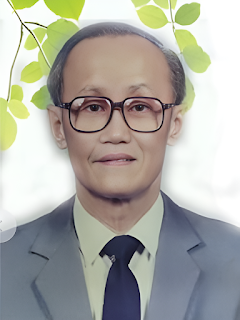
There was another surprise three days later. A friend told me that his uncle - his father's brother - had passed away on the 23rd morning, aged 92 years old. I had known Chong Kee Kian for a very long time. Sometime in the  late 1970s, he had dropped into Hooi Lye Association in Kimberley Street on a Sunday afternoon. He had heard about the Penang Chess Association having our chess playing sessions there and was eager to have some social games with us.

I saw him coming in and looking at many of the players but no-one paid him any attention. Myself being curious about him, I struck up a conversation and before long we were exchanging pieces on the chess board. And that was the start of a friendship that lasted decades. It turned out later that Kee Kian was also an Old Free. While playing chess was a hobby for him, his real passion was ballroom dancing When he celebrated one of his milestone anniversaries, he invited my wife and I to their anniversary dinner at a major heritage hotel and he and his wife practically spent the whole evening oozing their way around and across the floor. The perfect partner for one another, I had observed then.

After the Covid-19 pandemic set in, his health took a turn for the worse. But then, he was already almost turning 90-years -old. Warded many times in intensive care, I learnt, and each time recovering sufficiently. But he was no longer strong enough to venture out on his own. I can't quite remember the last time he went to an OFA annual dinner but we greeted one another like old friends do.

Last Tuesday, I received a message from Chee Wooi to tell me that his father had passed away that morning. This one too, I also couldn't believe the information. Saw Boo Pheng dead at 71? I never knew he was sick, let alone dying! I took me some time to fathom it but it had to be true as the information had come from his son. But what had happened? Sick for some time, relapse of an old illness after a seven-year reprieve. Darn it!

The last time I had been in touch with Boo Pheng was in 2020. We had been messaging one another and had promised to meet for a cup of coffee, which never happened because of the pandemic. We never got in touch after that but strangely enough in the last week or so, I suddenly thought about him. His name sprang to mind. I should get in touch with him, the thought in my head swirled around. How or why it did that to me is quite a mystery but it happened. Unexplainable.

Anyway, Boo Pheng and I go back a long way. We met in May or June of 1972, at Han Chiang Primary School. Playing chess. He playing for the Technical Institute team, me for the Penang Free School team. Our schools had met in one of the preliminary rounds and we were playing on the second board. Strangers to one another but by the end of the game, a friendship had been struck. 

A friendship that took us through the decades. In 1989, fate brought us together to collaborate on writing a beginner's book on chess with yet another friend. The publishers wanted a book in Bahasa Malaysia and Boo Pheng was there to help with the translation. That he was a teacher and also a chess player helped to smoothen the translation because he knew what I wanted. So my original script was in English and he duly translated it into Bahasa Malaysia. Catur, the book was called. Funnily enough, when the publishers later wanted an English Language version of the book, I could not find my original manuscript and I had to translate the contents from Bahasa Malaysia back into English.

But away from chess, he and I had one more thing in common: durian. I remember in the 1990s, he would telephone to ask me to join him on a durian hunt around the fruit stalls of Balik Pulau and Paya Terubong during the durian season. For me to travel all the way from Bukit Mertajam to meet in Paya Terubong already tells people how durian-mad both of us were. Our durian adventure lasted for only three or four years when finally, I grew tired of driving all the way out.

So there it is, three stories that I had to get off my chest. Glad to have known you guys: Lean Hin, Kee Kian and Boo Pheng. Rest in peace, forever.

#Friendship #Loss #Remembrance #EmotionalJourney #InMemoriam


Wednesday, 30 August 2023

Friends (朋友)

The occasion was the Ban Hin Lee Bank reunion dinner at the Eastern & Oriental Hotel on 19 August 2023, which had brought together about 250 former staff. As the vast majority of us hadn't seen one another for at least five years, this particular Alan Tam song, Friends (朋友), brought back unforgettable memories of the best times we had in the bank.

As usual, we had to have Lee Soo Hock sing this signature song. He was an aspiring singer in the 1990s and jokingly - we had worked in the same ATM Centre - I told him then that if he ever turned professional, I would apply to be his manager.

Well, it turned out that he did earn himself a recording contract and had appeared semi-professionally on television but by then, I was planning to leave the banking industry and looking elsewhere for my career change. However, managing a singer was no longer within my list of things-to-do. Soo Hock went on to conclude his career in CIMB Bank, retiring very recently. By the way, he sang two songs on our reunion night. There's also Shanghai Beach featured here in this video.

By the way, I also made a third video recording of Teik Kean singing his ever popular version of The Room at the Top of the Stairs but I was struggling with a problem with my mobile phone and can't find it any more. So, Teik Kean, if you are reading this, my apologies for being unable to upload it to YouTube for everyone's enjoyment.

Wednesday, 23 August 2023

BHLBank's 88th anniversary

A few months ago, word got out that there would be a reunion of the former staff of Ban Hin Lee Bank (short form: BHLB or BHLBank) in August this year. An organising committee had been formed and through our facebook page, everyone with connections to the old bank were invited to sign themselves up for the occasion. 

Of course, I was among the very first ones to pay up for myself and Saw See. There was no way that we were going to miss this reunion of the old Ban Hin Lee Bank family and in fact, we hadn't missed any of the previous reunions. It has been far too long since we all got together to relive the good ol' days. And according to Khoo Khay Seang, the organising chairman, the last reunion was held five years ago in 2018. Time certainly had flown; all of us, five years older! 

The attendees were initially capped at 200 because of concerns over the capacity at the Eastern & Oriental Hotel but because of the rush of the last-minute sign-ups, there were eventually almost 250 names on the dinner list. I dare say if the list had remained open till the reunion's eve, we could have had 300 to 400 people signed up! 

Of course, topping the guests were the former directors of the bank and here, we had Goh Eng Toon, Stephen Yeap Leong Huat and Yeap Lam Yang stepping out of the lifts to much attention around. People were really very happy to see this trio and their families. Neoh Choo Kean was also present but unfortunately, not Tan Kuan Hai. Among the oldest among the former colleagues was Khoo Boo Hean, now 92 or 93-years old.

Coincidentally, this function could have also marked the 88th anniversary of Ban Hin Lee Bank, if it were to still exist. The bank was established in 1935: the date of incorporation was 17 September 1935 although the actual start of operations was on 01 November 1935. But by 30 June 2000, Ban Hin Lee Bank had ceased to exist, swallowed by Southern Bank, and thus became one of the casualties of a national corporate merger exercise pushed by the Government of Malaysia. Very few of the locally-incorporated financial institutions were spared the cull. 


How about a closer look at this remarkably crazy group of people?


Sunday, 23 April 2023

Meal in Nibong Tebal

This year is going to be the year of re-unions for me. Come this third of May, some of my old friends from the PFS Class of 1970/72 will be meeting up at the E&O Hotel for lunch. I'm hoping to see about 18 or 19 of us at this gathering. Then in August, there'll be this reunion of some 200-plus former colleagues from Ban Hin Lee Bank at the same hotel as well. What will really close the year for me will be The Old Frees' Association's Centenary annual dinner on the 21st of October. I don't know how many will attend, but it will sure be grand. But first, last Thursday, a batch of my former colleagues met up in Nibong Tebal for a meal. Great year for meet and eat, I tell you!


Sunday, 2 April 2023

Timeless friendships

Well, it's time to get ready for the exBHLBankers' latest get-together or reunion in August! I can't quite remember how many times we have had our big reunions since Ban Hin Lee Bank (or BHL Bank) was taken over in 2001 but in my opinion, they are just not often enough. Thus, every big reunion should be treated by everyone of our old colleagues as opportunities to renew our old friendships. As many as possible should try to attend. And it is no laughing matter that we are still largely atuned to one another after all this time. It struck me, when I first posted about this reunion on my facebook, that if Ban Hin Lee Bank were still around today, the establishment would be 88 years old. 2023 would have been an auspicious year for a now non-existent bank. So here we are, we shall celebrate the 88th anniversary of a non-existent bank come this August 2023. 😄

Venue: Macalister Ballroom, E&O Hotel

Highlights: Buffet dinner Lucky draw Table draw Door gift

Cost of dinner: RM150 nett per pax, as charged by the hotel.

Good news! We pay only RM100 nett per pax. Everyone, including spouse, gets a RM50 subsidy. Those who were of messenger level in the bank will be fully subsidised (but they need to register and confirm their attendance).

Registration is by payment: 1. Pay to Johnny Phun Chye Jin (CIMB Acct No: 7022955638) 2. Send a a copy of the transfer to Johnny (016.4404066) by WhatsApp. Include your name, especially if your bank account name is different from your facebook name, and your last branch in BHLB.

Early Birds registration with payment: 

The first 50 registrations will receive an early bird gift. We will go by payment order.

Please spread the news and encourage your friends to participate to make this a success!


Monday, 20 March 2023

Exchanging keys

From the 17 September 1935 copy of the Pinang Gazette and Straits Chronicle, an old defunct newspaper from Penang, comes this story about that old Penang millionaire, Yeap Chor Ee. I believe this story could have been timed to coincide with the date of Ban Hin Lee Bank's incorporation as a limited company. Same year, same month, same day. Previously, it was a private community bank operating as a sole-proprietorship with all the personal risks shouldered solely by the owner. To me, the section on his banking business made the most interesting reading. The rest of Yeap Chor Ee's history is more or less widely known but that little snippet of him exchanging safe keys with his son, Lean Seng, in Kuala Lumpur, well, that was quiet something new to learn! Happy reading....

ROMANTIC CAREER OF MR YEAP CHOR EE

The announcement that Messrs Ban Hin Lee and Co, the well-known bankers of Beach Street, Penang, intend converting the business into a limited liability company marks another milestone in the romantic career of its sole proprietor at the present time, Mr Yeap Chor ee, now easily Penang's wealthiest citizen. Truly Mr Yeap Chor Ee's rise from poverty to affluence is one of the romances of Penang, one of the romances of the Chinese in Malaya. There have been other figures almost as romantic as him, Foo Choo Choon, the Tin King, for instance, but whereas Foo Choo Choon ended his days in comparative penury, nothing like that sort is likely to occur to Mr Yeap Chor Ee who has laid the foundations of his prosperity on solid structures. Today he is the recognised Sugar King; the biggest landed proprietor of Penang, deals largely in tin and has a banking business as safe as the Rock of Gibraltar.

OF HUMBLE BIRTH

Mr Yeap Chor Ee is a man of humble birth. A native of Fukien, he came to Malaya about 50 years ago, when Malaya was still jungle and entirely undeveloped. About 32 years ago he settled in Penang and owned a small barber's shop. That barber's shop gave way to other small businesses. Some time between 1890 and 1900 he started to deal in the brown sugar trade and from that time he has never looked back. The main industry in Province wellesley was then sugar planting, no fewer than four mills being in operation. From 1900 to 1910 Mr Yeap Chor Ee confined his attention to white sugar. Then came the rubber boom, and sugar plantations were turned into rubber estates. One dollar shares in the sugar plantations became ten dollar shares in rubber estates. That meant the end of the sugar industry in Province Wellesley. Later Mr Yeap Chor Ee turned his energies to tapioca and other trades, extending the scope of his activities and increasing his wealth.

THE BANKING BUSINESS

We are not quite certain when Mr Yeap Chor Ee started his banking business, known as Ban Hin Lee; but it is now well-known throughout Malaya. Mr Yeap Chor Ee has always controlled the Penang business which is regarded as the head office, while the Singapore business has been in charge of a son. Several years ago Mr Yeap Chor Ee, in the course of a case in the Police Court, revealed how carefully he conducts his business. Mr Yeap Chor Ee occasionally used to visit the Singapore Branch. When he did that he notified his son at Singapore. The son had to leave Singapore by the night mail just as the father left Penang. They met at Kuala Lumpur for the purpose of exchanging the keys of the safes. Mr Yeap Chor Ee took the Singapore keys with him, while his son had to continue to Penang with the Penang keys. The same process was repeated when Mr Yeap Chor Ee was on his way back to Penang. That was, of course, several years ago, before Mr Yeap Chor Ee's other sons began to help him in the firm. Now, they all work at his banking firm.

THE TOUCH OF MIDAS

In recent years Mr Yeap Chor Ee's wealth has accumulated with such strides that he has become known as the Chinese with the touch of Midas - everything he touches turns to gold. A couple of years ago, before the Tin Control Scheme came into operation, Mr Yeap had bought a great deal of tin, which he stored up until better prices set in. Tin went up and he made an enormous of profit. About a year ago he bought Homestead, Northam Road, the most palatial residence in Penang, on which Mr Lim Chin Guan, then in his hey-day, spent a fortune. Mr Yeap Chor Ee obtained it "for a song." Today he is easily the richest man in Penang, and his fortune is expanding with a vengeance. He donated $10,000 to the Penang Jubilee Fund.

Mr Yeap Chor Ee is one of the most careful and frugal men, and that is the main reason why he has amassed such a great fortune; unlike Foo Choo Choon, who spent his money with a lavish hand. In spite of his colossal wealth Mr Yeap Chor Ee still remains the humble individual who prefers a ricksha to a car, a plain white tunic suit to palm beach. One other fact about this remarkable man is that he does not know a word of English and transacts most of his business through interpreters.