Aiyah....just when I was not expecting it, the Tacoma tree outside the house has decided to flower profusely again. It will be another seven to 10 days of sweeping the porch and the road outside to clear off the fallen flowers....
Saturday, 18 April 2026
Wednesday, 2 April 2025
Guardian spirits of the land
Before I go any further, I should mention that this peculiar local guardian spirit is sometimes called Natok Kong, or even Latok Kong. Why? Because in the old days, Chinese settlers had trouble pronouncing certain Malay words, and Natok Kong or Latok Kong just stuck.
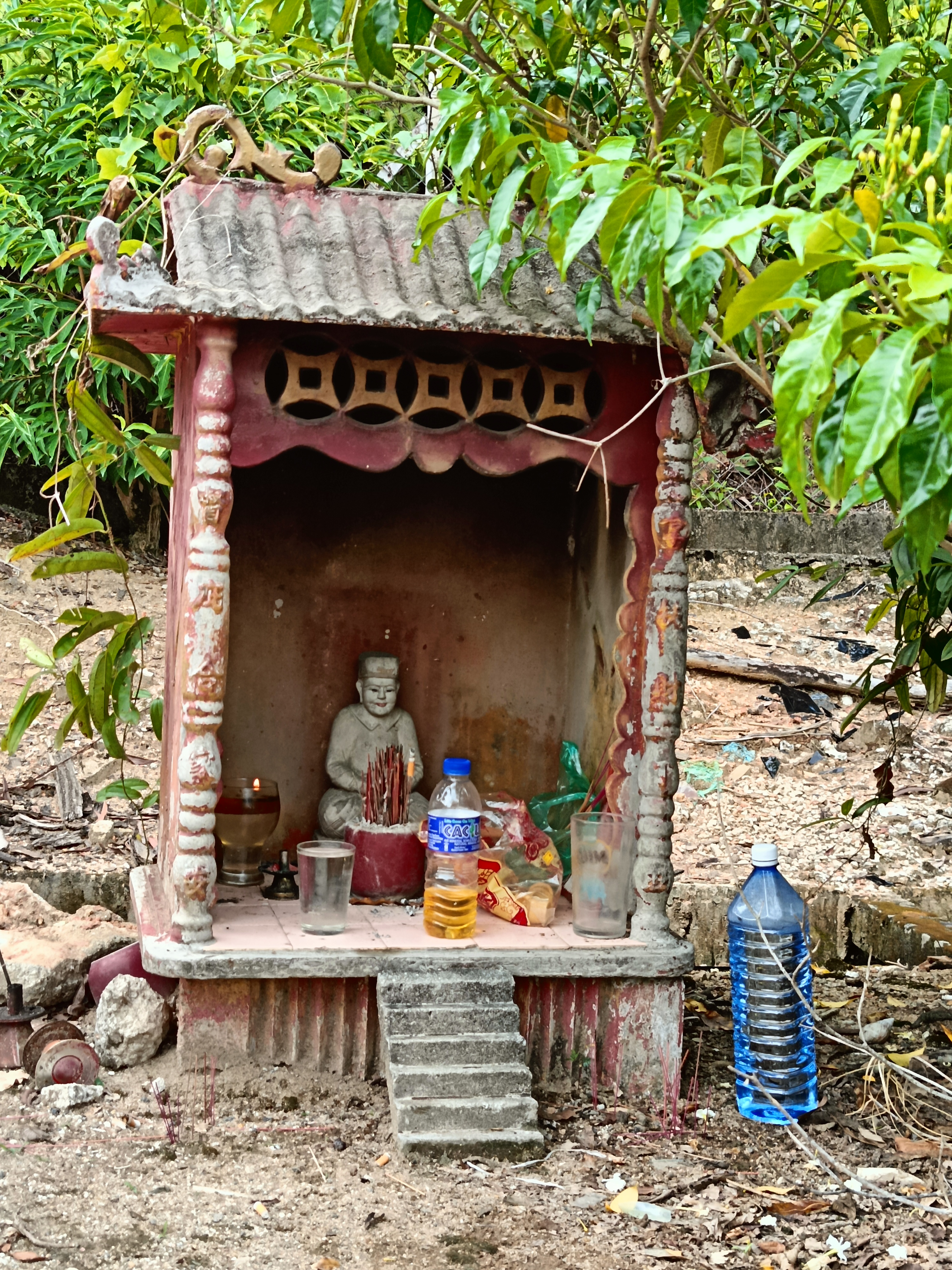
These shrines aren’t grand temples like the ones dedicated to well-known Chinese deities. They’re usually small, tucked into corners, by the roadside, nestled beneath trees or standing quietly outside homes and businesses, some private and some public—especially in areas with large Chinese communities. But even with their modest appearances, they hold immense significance for those who worship there.
The Datuk Kong isn’t just one deity; it’s a general term for guardian spirits believed to watch over specific places. Some say each Datuk Kong was once a real person—an early settler, a respected village elder or a local leader who shaped the land’s history. Others believe these spirits are tied to nature, acting as protectors of the land, trees and hills. Whatever the origins, one thing’s clear: their presence is deeply woven into the lives of the people who revere them.
What makes the worship of Datuk Kong fascinating is how it blends Chinese folk traditions with Malay spiritual beliefs. The name itself—Datuk, a Malay honorific—already hints at this fusion. As Chinese immigrants settled in the Nanyang, they encountered local traditions and incorporated certain elements into their own practices. And so, the Datuk Kong became a figure straddling different worlds and cultures, and embodying Taoism and indigenous animistic beliefs all at once.
No two Datuk Kong shrines are exactly alike. Some are just humble altars with a single Datuk Kong statue or figurine and incense burners, while others are more elaborate, featuring multiple and different Datuk Kong statues together, red lanterns, banners and plaques inscribed with prayers or auspicious words. Occasionally, there's no statue at all. Instead, I've seen earth mounds, termite mounds, boulders draped in yellow cloth. even red wooden plaques with gold-painted Chinese characters, to represent the deity—emblems of the Datuk Kong’s presence in nature. Offerings vary too—flowers, fruits, tea and even traditional Malay delicacies like sireh and pulut (glutinous rice) are common. But one rule is almost always observed: no pork. Since many Datuk Kong spirits are believed to have Islamic roots, worshippers take great care to keep offerings halal. If anything, this small but significant detail reflects the harmonious blending of cultures that defines Malaysia’s spiritual landscape.Sometimes, though, the Datuk Kong doesn’t even have a physical shrine, but they are there all the same. When we step into parks, forests or mountains, we just know the spirits are there. It’s an unspoken understanding—we respect their presence, and in return, we hope they don’t disturb us. Some people even carry joss sticks, ready to offer a quiet prayer to appease them and ask for forgiveness for any unintentional transgressions, just in case. And I say this from personal observation—I’ve seen friends bring joss sticks to Kedah Peak when we visited in the 1970s, long before it was developed into the Jerai Hill Resort like it is today.
For those who pray at these shrines, Datuk Kong isn’t just a guardian of the land—he’s a protector, a giver of wisdom, someone to turn to in times of need. A shopkeeper might light incense and ask for prosperity in business. A traveller might pause to seek safe passage. A family might offer prayers for good health and peace at home. Whether these requests are granted is, of course, a matter of faith. But ask any believer, and they’ll tell you—Datuk Kong watches over them, in quiet but steadfast presence.
And despite the ever-changing world around them—where old villages give way to skyscrapers and traditions constantly evolve—these small shrines remain. They’re a silent but enduring reminder of the past, a testament to a community that continues to find comfort in its spiritual roots. It’s an unspoken understanding, one that bridges cultures, connects generations and, in its own quiet way, keeps the spirit of Datuk Kong alive.
Note: I wrote about unintentional transgressions above. But what about the intentional ones—the kind that affect innocent parties? Just last month, I heard a story about someone—an artist, apparently—who thought it’d be cool to paste a picture of a well-known local art celebrity over the face of a Datuk Kong statue. He brushed it off as nothing more than artistic expression, just a bit of creative flair. No harm intended.
But whether he meant any harm or not, something strange happened soon after. The person whose face was used in this so-called "art piece" started experiencing some unexplained health issues. Nothing life-threatening, but troubling enough that it couldn’t be ignored. It got to the point where his family felt compelled to seek forgiveness. And once they did, the health problems reportedly eased.
Sceptics might scoff and call it pure coincidence. And maybe it was. But if there’s one takeaway from stories like this, it’s that local spiritual cultures—whether you personally believe in them or not—are not to be taken lightly. Some things, some traditions, have a way of demanding attention and respect. Best not to tempt fate.
Note: These pictures of roadside Datuk Kong shrines were taken during my walks around the neighbourhood. Maybe I should revisit these shrines to get updated pictures of these statues.
Sunday, 25 August 2024
Non-stop gluttony
Oh, ferk! I found another caterpillar on one of my plants! This one was a whopper, about three inches long. It was bright green and had been hiding pretty well among the branches while happily munching away at the leaves. The first clue was the droppings on the ground—big enough to be noticed. So, I bent down for a closer look and, sure enough, there it was! At first, I was a bit fascinated by how efficiently it was going about its business, chomping non-stop, but then it hit me—if I didn’t do something, I’d soon be left with a bare plant. So, I had to take the inevitable step and remove it once and for all. At least it'll make a good meal for the birds...
Tuesday, 20 August 2024
Neat droppings
I posted this picture on my facebook this morning. The neat arrangement of droppings from a large caterpillar. It was on its way to pupation and seemed quite lethargic. I didn’t have the heart to remove it from my Adenium obesum or desert rose plant as it would be a shame to deny it the chance to transform into a butterfly or moth at this late stage of its crawly life. So, I left it undisturbed, hoping that by tomorrow, all that remained would be some old clues that it was even here. What alerted me to its presence this morning were the large droppings on the ground around my flower pot, varying in size. A quick scan of the leaves revealed this two-inch monster. I also spotted two juvenile green caterpillars munching away on the leaves, but they are no longer there....
Friday, 23 February 2024
Revisiting BM hill
My daughter, back from Kuala Lumpur, was eager to explore the hill trails but my wife was unable to join us, So it was just me with my daughter as we set off along the trail beside the stream that ran through the park. Though the tarmac road had been improved significantly, the hill trail we took was basically untouched. A huge tree that had fallen across the trail more than two or three years ago was still uncleared and we had to clamber across the trunk. Because hikers were still finding ways to get into the forest park despite its temporary closure, the earthen and stone trail was still very much in use by them and thus, nature had not had time to reclaim it.
At one point, I decided to veer off the normal path and took my daughter to find the park's biggest tree. Her first visit here. This is reputedly the biggest known tree in Penang, whether on the mainland or island.Eventually, we emerged from the trail to rejoin the tarmac road. I was surprised by the work done by the Public Works Department to improve the condition of the road and also the steep slopes beside it. But there was still one problematic part that was covered by torn blue sheets of plastic. I wonder what the Department is going to do next. They can't simply leave the job unfinished. It would be quite an eyesore.
Oh, by the way, because we had rejoined the tarmac road at a bend where the metal ladder stood, we did not even reach the old Wawasan 2020 viewpoint. It would be interesting to see what has happened to this place. It shall be left to another trip, and perhaps I may even climb higher next time to the clearing where the tea house is.
Wednesday, 20 April 2022
Greased lightning
![]() |
| Photo by Clayton Malquist on Unsplash |
The rain came at about six-thirty or so, but had lightened up enough at about 7.15pm. From our shelter at a cafe, we decided to head for home. But who could tell that the rain became heavy again just as we entered the highway to the bridge. The windscreen wipers were working at full speed to clear the water away.
On the bridge itself, the downpour was so terrible that all traffic slowed down to a 50kph crawl; still moving smoothly but slowed down considerably.
All all around us, on both sides of the bridge, we detected lightning bolts crashing down. I was concentrating on the road but from the corner of my eyes, I could see the bolts of lightning striking the sea. Not pencil-thin lightning that we normally see from afar. No, these lightning bolts were near and thick, and every time one struck, the interior of the car lit up.. I estimated maybe some 30 to 40 bolts accompanied us on our journey across the bridge. Lightning has been known to strike vehicles and all of us on the bridge were simply lucky that nothing untoward happened.
By the time we arrived at the mainland end of the Penang Bridge, the lightning strikes were behind us. But it was still raining very heavily and the roads were flooded. I debated whether to use the North-South Expressway or the old Federal road to get home, and decided on the latter. But this road was also flooded in parts. In many places, I had to keep a constant pressure on the accelerator so that the flood water wouldn't flow into the exhaust. And finally, after more than an hour's journey, I could open my gates and park the car under the porch. Took me another half hour to wind down after this experience!
Wednesday, 27 November 2019
The BM hill
![]() |
| 17 Sep 2019 |
I remember really first noticing the BM Hill in 1973 when I joined the volleyballers from Penang Free School and supporters on a bus journey from Butterworth to a school in Bukit Mertajam for a state-wide school competition. At that time, the school had a very formidable volleyball team and they were sweeping prizes all around in the state. On that bus trip, I got to see the hill loomed ahead of us for the first time. Yes, you guessed right, that was the first time that I was visitng Bukit Mertajam on mainland Province Wellesley in all my 20 years! Fancy that.
![]() |
| 22 Sep 2019 |
Last September when the haze was at its height, I rued the fact that the hill was shrouded by the haze. From the direction of the railway station in Bukit Mertajam, there was nothing I could see whereas in better days, the hill could be seen in its magnificence: a clump of overturned earth with the sun peeking out during sunrise.
Then came the first rains finally, on 25 Sept, that began the process of sweeping away the dust from Sumatra. Mind you, this was a few days before the start of the annual Nine Emperor Gods festival which is celebrated in the country but never more so than in Penang.
![]() |
| 25 Sep 2019 |
As I mentioned earlier, I can't remember the countless times that I had taken a picture of this hill with my camera or mobile phone. More so with the clearing of the haze, the sky is seen in its splendour. There are days when I simply stop the car by the roadside just to gaze up at the hill. Here are some of the better recently-taken pictures.
![]() |
| 26 Sep 2019 |
![]() |
| 1 Oct 2019 |
![]() |
| 6 Oct 2019 |
![]() |
| 8 Oct 2019 |
![]() |
| 11 Oct 2019 |
![]() |
| 16 Oct 2019 |
![]() |
| 27 Oct 2019 |
![]() |
| 28 Oct 2019 |
![]() |
| 28 Oct 2019 |
![]() |
| 30 Oct 2019 |
![]() |
| 30 Oct 2019 |
![]() |
| 1 Nov 2019 |
![]() |
| 7 Nov 2019 |
![]() |
| 19 Nov 2019 |
![]() |
| 20 Nov 2019 |
![]() |
| 24 Nov 2019 |
![]() |
| 26 Nov 2019 |
![]() |
| 27 Nov 2019 |
Tuesday, 22 October 2019
Cherok Tokun hill damaged
Two years ago on 4 Nov 2017, we wife and I were in Kuala Lumpur when we heard that a heavy rainfall in Penang had flooded several low-lying areas on the mainland. We were due to return home on the next day but on the train, we learnt that the flood situation in Penang was actually very extensive.
We were concerned that even though we could arrive back at the Bukit Mertajam train station, it would be almost impossible to get home if the flood waters were preventing taxis from picking us up. In fact, a taxi driver we called told us then that it would depend on whether he could drive into the train station. Luckily for us, he could and we reached home safe and sound.
Although our house in Taman Jernih was not affected by any flood water, the people in Taman Sri Rambai probably had it the worst. Flood waters had risen about four feet into their homes and all their furniture, electrical appliances and motor vehicles were all spoilt or severely damaged.
For about four weeks now, it has been raining very heavily in the afternoons in this part of the country. It was a big relief when the rains started coming in the last week of September to clear away the thick haze that had enveloped the peninsula.
But the rains have not stopped. Nice, clear, brilliant mornings would give way to dark clouds by mid-afternoon and more often than not, the day would end with a heavy deluge.
The rain yesterday evening was particularly heavy too. We had driven to the Wembley St Giles Hotel on the island for The Old Frees' Association annual dinner and initially, we weren't too aware that the rain was coming down hard.
But it did come down hard and word started filtering in gradually that the roads around Bukit Mertajam were almost impassable to traffic. Along the busy Jalan Song Ban Kheng, we heard that the residents of Taman Sri Rambai were starting to move their cars to the road shoulder in anticipation of rising flood waters.
I checked Google Maps and indeed, the roads leading to my neighbourhood were all marked in deep red. Possibly, traffic could already be at a standstill. If we wanted to go home, yes, it was still possible but it would have to be a long diversion south.
I continued checking the Map constantly to see whether traffic was moving again. By 11.30pm when we left the hotel, traffic looked almost back to normal. I therefore took the chance to drive home on my usual route, and it was quite all right.
This afternoon, I received some pictures showing the extensive damage to the Cherok Tokun hill in Bukit Mertajam.
Same like two years ago, the rushing flood waters had severely damaged the tarred road as well as the many tracks around the recreation park. The road surface were almost destroyed while thick mud coated the car park. Worse, water was still gushing down the hill. This was also a repeat of 2017, coming some two years later.
From this point on, I think I shall let the pictures do the talking. They were taken this afternoon at the Cherok Tokun hill.
Wednesday, 21 November 2018
Singapore's kampong revisited
After waxing exuberance over my visit to Pulau Ubin last March, I promised my wife that I'd bring her to the island when we next visit Singapore. On the 10th of this month, that was where we went as we wound up our short trip there.
With the help of my old friends of course! Jeff Yeo and his lovely Evelyn. According to Jeff, each of us must've taken about 22,000 steps during the four hours on the island. That was about 15 kilometres. Nevertheless, that wasn't even covering the whole place.
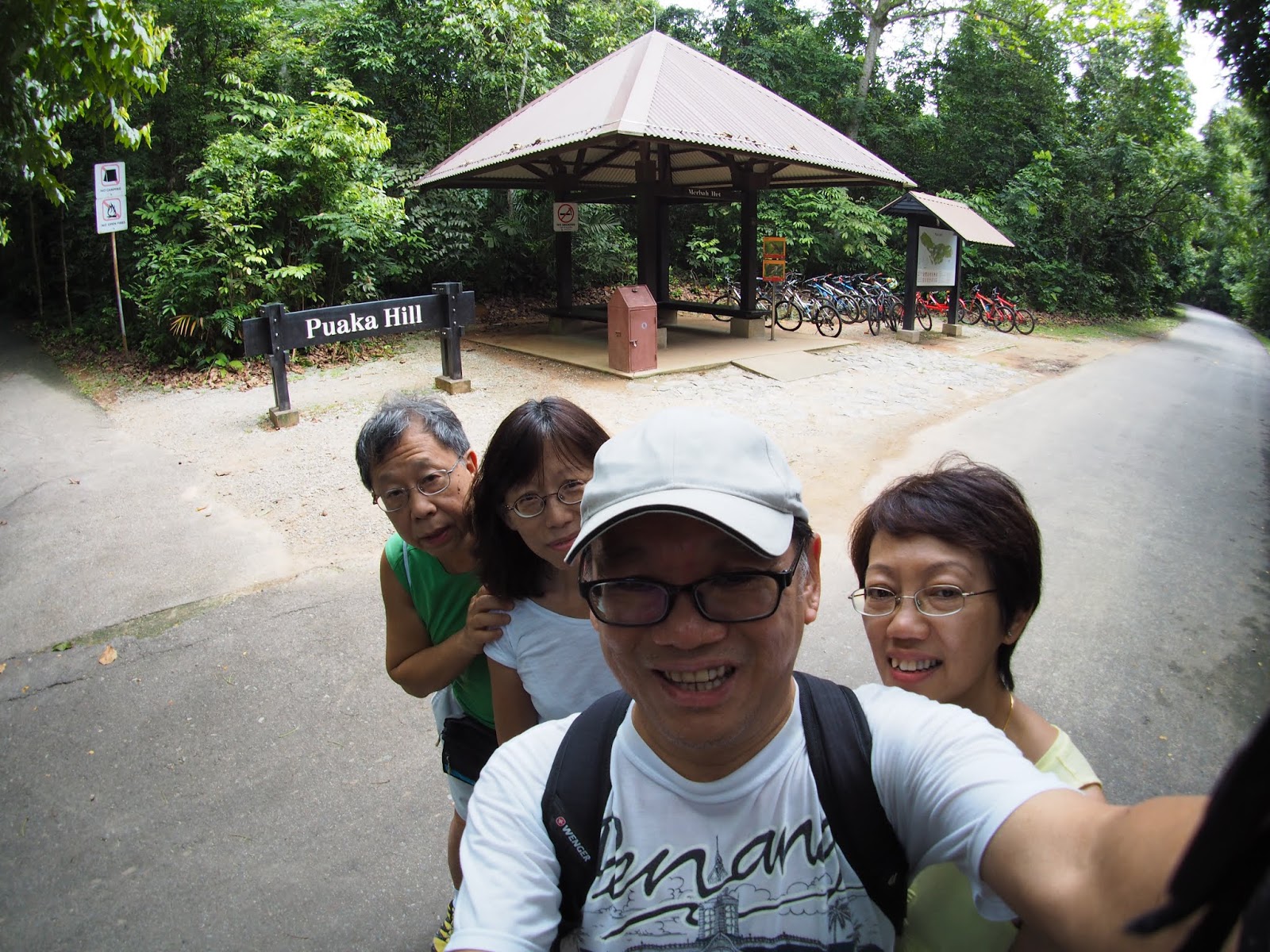
Despite it being a Saturday, we felt that the crowds were just not there. There were more people on the island last March. Our first destination would be the Puaka Hill in the middle of the island.
Along the way to Puaka Hill, we came across this sign at the side of a path leading to a small temple called the Fo Shan Ting Da Bo Gong Temple. However, there is a bigger temple with the same name just a short distance away from the Pulau Ubin ferry terminal. I am told that the locals distinguish the two as the country temple and the town temple. Below is the altar of the Tua Pek Kong deity at the country temple.