Showing posts sorted by date for query wu lien-teh. Sort by relevance Show all posts

Wednesday, 15 July 2026

No title attached, thank you

I'm not one to chase state honours because I've never been a businessman or corporate leader, nor have I ever felt the need for the weight of a state or federal title behind my name. But if an award comes my way in recognition of my contributions to society, I certainly wouldn't turn it down. One thing is for sure, though: I would think twice before accepting any award that comes with a title. I still prefer to stay low-key and out of the limelight.

Last Monday, I attended an investiture ceremony at Dewan Sri Pinang to receive the Darjah Johan Negeri (DJN) from the Penang Governor, Ramli Ngah Talib, on the occasion of his official 85th birthday.

It wasn't my first state award. The last time I stepped into Dewan Sri Pinang for this purpose was in 2021, when I received the Pingat Kelakuan Terpuji (PKT) for 2020, the ceremony having been postponed because of the Covid-19 pandemic. And because of the pandemic, I never got to receive the award personally from the then Penang Governor, Haji Abdul Rahman bin Haji Abbas. But still, I had to dress up to the nines just to collect the medal. Before that, I have to turn the clock back to 1995, when I was awarded the Pingat Jasa Kebaktian (PJK).

Three medals under my belt. I think that's enough, lah. I'm happy, I'm contented, and I'm certainly not looking for any more.

There was another reason why receiving the award from Ramli made the occasion a little more special. Many people probably don't realise that he was the President of the Malaysian Chess Federation from 2007 to 2016. As I stepped forward to receive the medal, there was only time for a brief congratulatory handshake. I quickly told him, "This award is for Penang chess."

Whether those few words registered with him amid the hundreds of recipients that day, I really don't know.

Later that evening, however, there was an unexpected sequel. At the state dinner, as Ramli made his way along the red carpet greeting the guests, he shook my hand once again. This time, I simply reminded him with a single word: "Chess."

Before he could respond, his wife, Raja Noora Ashikin Raja Abdullah, who was walking just behind him, immediately looked at me and said, "He was in Norway." She was referring to the 2014 Chess Olympiad in Tromsø, held during Ramli's tenure as President of the Malaysian Chess Federation.

I found it fascinating that, completely off the cuff, she could instantly make the connection and recall that particular event. It was a fleeting exchange lasting only a few seconds, but it left a lasting impression on me.

As a postscript, I want to mention some other people who received titles and medals during these four days of the investiture.

  • Apart from me from the Wu Lien-Teh Society, there were also Clement Liang Chow Ming and Ong Siou Woon who received their PKT and PJK respectively. I thank the President, Anwar Fazal, for putting forth my application and the Secretary, Dr Hor Chee Peng, for the patience to prepare all the paperwork.
  • Then from The Old Frees' Association, other than me, Albert Moh See Eng was conferred the DGPN, Kannan Srinivasaraghavan received the PKT and Lim Wee Seong the PJK.
  • Finally from the Penang Chess Association, the recipient other than myself was Chong Kean Foong. There was also a Lee Ewe Ghee, but the one I know said that this wasn't him.


Thursday, 5 February 2026

Harbin Medical University visit

Every few years, Penang seems to rediscover Dr Wu Lien Teh. Not because we forgot him, but because something happens out there in the world that suddenly makes what he did a century ago feel very current again. With Harbin Medical University celebrating its 100th anniversary soon, that old Penang connection has come back into view, and this time it came in the form of students and lecturers travelling all the way from northern China just to stand in front of a statue on our island.

Wu Lien Teh was born in Penang, studied in Cambridge and then went where he was most needed. In 1910, when a deadly pneumonic plague broke out in north-east China, killing people by the tens of thousands, he was sent to Harbin with almost nothing but a clear head. People didn’t understand how the disease spread, didn’t believe in masks or quarantine and certainly didn’t want to hear about cremation. Wu studied the outbreak, figured out it spread through the air and insisted people protect themselves. He designed a simple thick gauze mask that anyone could make. That plain-looking mask would later be recognised as the forerunner of today’s surgical masks and respirators.

When the deaths continued, Wu made a decision that went strongly against custom. He ordered the cremation of bodies to stop the disease from spreading further. It was controversial, but it worked. By early 1911, the plague was brought under control and deaths had stopped. That episode alone would have secured his place in history, but Wu didn’t leave after the crisis passed. He stayed on, built public health systems and trained doctors. In 1926 he founded what would later become Harbin Medical University.

War eventually forced him back to Penang, where he lived out his later years quietly, practising medicine while his reputation grew overseas. He passed away in 1960, long before the world rediscovered masks during Covid-19. But when the pandemic came, many people were surprised to learn that the idea of mass mask-wearing had a Penang-born doctor at its roots.

This week, students from Harbin Medical University visited Penang as part of their centennary build-up. They laid flowers at Wu’s statue outside the Penang Institute, met the Dr Wu Lien-Teh Society and tried to understand the place that molded the man who shaped their university. For them, Penang was not just another stop, but the starting point of their institution’s story.

State exco Wong Hon Wai spoke about how Penang and Harbin are tied together by Wu’s life and work. He reminded the audience that Penang has long recognised Wu’s contribution, through the Dr Wu Lien Teh Society, through roads and housing areas named after him and through the statue presented by Harbin Medical University years ago. Last year, when Dr Zhong Nanshan came to Penang to receive the Wu Lien Teh award for leadership in public health, it felt less like an honour being handed out and more like a torch being passed on.

What surprised some was how few people still know Wu’s story. China’s deputy consul-general in Penang admitted she only found out he was Malaysian after working here. Her hope was that his life could be told in more accessible ways, through short videos, documentaries or films, so that more people understand why he matters.

As Penang builds more direct air links with cities in China, these old connections become easier to renew. Harbin Medical University will mark its 100th anniversary later this year, but the story it is celebrating began much earlier, on this island. And every time students return to Penang to look for Wu Lien Teh, we are reminded that some Penangites never really leave, even when history carries them far away.

Tuesday, 11 March 2025

Dr Zhong Nanshan in Penang


Quite frankly, I didn't know who Dr Zhong Nanshan was until about three months before the 146th anniversary of Dr Wu Lien-Teh's birth. Dr Wu Lien-Teh was, of course, one of Penang's most well-known personalities of the 20th century. Fresh from winning the Queen's Scholarship as a pupil of Penang Free School, he went on to study medicine at the University of Cambridge in England. After returning, he had a short stint in private practice in Penang before being unfairly persecuted by the British colonial authorities, forcing him to accept an invitation to work in Imperial China. There, he gained worldwide fame as the plague fighter, eradicating the dreaded plague that had claimed around 60,000 lives in 1911. When his home in Shanghai was destroyed by Japanese bombing, he moved his family back to Malaya, where he resumed private practice in Ipoh. He retired to Penang in January 1960 but died suddenly a week later of a brain attack. That, in short, was the life of Dr Wu Lien-Teh.

The Dr Wu Lien-Teh Society was set up in 2012 by a group of Old Frees determined to revive his legacy. Since then, the Society has worked tirelessly to promote his name, including awarding gold medals to outstanding university students. Over the past decade, the Society has also organised annual public lectures where prominent figures from the medical field have been invited to speak—not just to doctors, but to the wider public. Then, in 2022, as the Covid-19 pandemic raged on, a pivotal decision was made to introduce the Dr Wu Lien-Teh Award for Leadership in Public Health. The first recipient was Dr Noor Hisham Abdullah, then Malaysia’s Director-General of Health. Day in and day out, as Malaysians struggled through the pandemic, Noor Hisham became a familiar face on television and social media, providing daily updates on infections, deaths, government measures, vaccinations and the need for face masks. It was no surprise that he was chosen as the award’s inaugural recipient.

A few thousand kilometres away in China, another medical man was doing more or less the same for his fellow citizens. Dr Zhong Nanshan, having already battled SARS and MERS, was the public face of China’s fight against Covid-19. I’m told that many Malaysians who knew Mandarin also tuned in to his briefings. But for me, well, I knew hardly anything about him. When our Society meetings rolled around and our Secretary-General spoke excitedly about Zhong Nanshan this and Zhong Nanshan that, I found myself wondering—who was this person commanding so much attention?

Now I know. Dr Zhong is a renowned public health expert from China, director of the Guangzhou National Laboratory and the National Clinical Research Centre for Respiratory Disease. He doesn’t travel much these days due to his advanced age—he’ll be 90 later this year—but, to everyone’s surprise, he agreed to travel to Penang to accept his award in person. When word spread that such a distinguished doctor was coming to deliver a public lecture on 08 March 2025, invitations were snapped up quickly. The conference hall at the Penang Institute was packed with registered guests, while those who arrived after registration closed were ushered into an adjoining room to watch via video feed.

In his acceptance speech, Dr Zhong said the award would further motivate him to build bridges, nurture trust and champion health for all. He expressed profound gratitude and humility, saying the honour was not just a personal achievement but a testament to the enduring spirit of collaboration between nations and a shared commitment to global health. “I am deeply moved to stand in the footsteps of Dr Wu Lien-Teh, a son of Penang whose pioneering work bridged nations and saved countless lives. By honouring leaders who embody Dr Wu’s courage and compassion, you ignite a beacon for future generations to follow. This award reaffirms my resolve to uphold his ethos of service, science and solidarity,” he said.

Adding a personal touch to the occasion, Dr Zhong was delighted to meet Pauline Barr, 78, who had taught him English when he studied in England 45 years ago. Pauline and her husband, Joe, now residing in Langkawi, made the journey to Penang just to see him again.

Among those present at the event were Penang Chief Minister Chow Kon Yeow, State Assembly Speaker Law Choo Kiang, State Exco members Daniel Gooi and Wong Hon Wai, and former Chief Minister Dr Koh Tsu Koon. Also in attendance was Ding Qiao, the vice-consul general of China in Penang. During the event, it was also announced that Loke Gim Tay had been made an adviser to the Dr Wu Lien-Teh Society, the second such appointment after Cheah Cheng Hye five years ago.

In his speech, the Chief Minister praised Dr Zhong’s dedication to scientific excellence, his courage in challenging prevailing narratives and his ability to communicate crucial public health information. “Like Dr Wu, he has demonstrated the power of scientific innovation and an unwavering commitment to public service. His work has not only transformed public health in China but has also provided invaluable lessons for Malaysia and the rest of the world. Dr Zhong embodies the very values that Dr Wu championed, making him a most deserving recipient of this award,” he said. Chow also took a moment to honour Dr Noor Hisham Abdullah for his steadfast leadership during the Covid-19 pandemic.

Later, after the public lecture, Dr Noor Hisham was invited to join Dr Zhong on stage, where the two past and present Dr Wu Lien-Teh award recipients participated in a health forum moderated by the Society's secretary-general, Dr Hor Chee Peng. The audience listened intently as Noor Hisham shared his experiences managing the Covid-19 crisis in the country. Today, he continues to contribute to healthcare as chairman of the National Heart Institute. 


Kudos to our tireless Secretary-General for a job well done!

Loke Gim Tay is the newly appointed second adviser to the Dr Wu Lien-Teh Society. His association with the Society dated back to May 2012 when a group of Old Frees organised a Penang Story lecture on Wu Lien-Teh at the Wawasan Open University in Penang. The Society came into being a few months later primarily because of that event.

Friday, 7 March 2025

Free School tour

A group of 26 visitors, all descendants of the parents of one of Penang’s most distinguished sons, Dr Wu Lien-Teh, visited Penang Free School and were given a tour of the school premises. Their visit included stops at the Archives and Pinhorn Hall, where they viewed artefacts related to Wu Lien-Teh. A group of students, the Free School Guiders, were on hand to show them around.


Thursday, 6 March 2025

Grave destruction


In just four days, on 10 March 2025, it will be the 146th anniversary of the birth of one of Penang’s most distinguished sons, Dr Wu Lien-Teh. He undoubtedly ranks among the most famous figures from the state—not as a politician, entertainer or businessman, but as a medical pioneer whose contributions had a lasting impact on global public health.

Two days from now, his legacy will once again be honoured with an annual public talk and an international award for leadership in public health. This year’s recipient is a most deserving figure—none other than China’s medical academician, Prof Dr Zhong Nanshan, who played a pivotal role in combating both the SARS and Covid-19 outbreaks in his country.

But today, I hear a cry of frustration and indignation from the relatives and descendants of Wu Lien-Teh, who have issued a press statement condemning the destruction of his parents’ graves at Mt Erskine Cemetery.

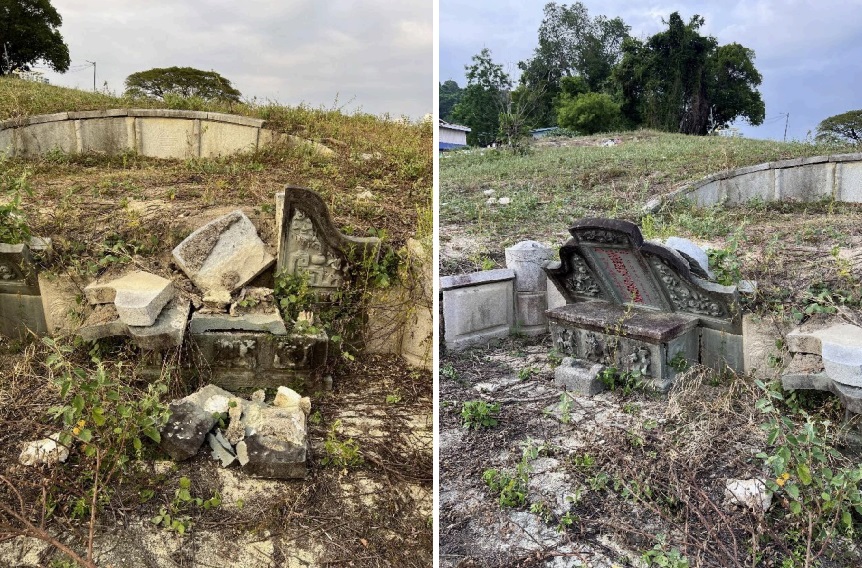
The graves of Ng Khee Hock and Lam Choy Fan, Wu Lien-Teh's parents, were found damaged in an incident that deeply saddened their descendants. These graves have stood for over a century, and could be considered historical and cultural landmarks. On 13 February 2025, it was discovered that Ng Khee Hock’s tombstone had been completely shattered, while Lam Choy Fan’s was severely damaged—leaning dangerously and at risk of collapse. Heavy machinery might have been involved, raising troubling questions about the circumstances behind the damage.

The Wu family members filed a police report on the next day and on that evening, a police inspector visited the cemetery to document the destruction. Inquiries with caretakers revealed that plans were underway to construct a columbarium in the area, with piling work scheduled to begin in May 2025. This revelation has deepened concerns about how the cemetery land is being managed and the potential threat to other historical graves.

In response, the family is appealing to the authorities for assistance in restoring the graves and is also seeking UNESCO protection to ensure that historic sites like these are preserved for future generations. These graves are not just part of one family’s history; they are a reflection of Penang’s rich heritage. By bringing attention to this issue, perhaps there would be greater efforts to protect and respect historical burial grounds, ensuring they remain an integral part of Penang’s unique cultural landscape.

Sunday, 23 February 2025

Wu Lien-Teh public lecture


We are very proud to announce Professor Dr Zhong Nanshan as the recipient of the fourth Dr Wu Lien-Teh Award for Leadership in Public Health 2025.

Academician Prof Dr Zhong Nanshan is a renown respiratory specialist from China and he shall deliver his lecture, From SARS to COVID-19: 20 Years' Lessons of Coronavirus Infections. The lecture shall be followed by a Health Forum with Tan Sri Dato' Seri Dr. Noor Hisham bin Abdullah on Pandemic Preparedness-Lessons Learnt and Ways Forward.

We cordially invite you to attend this year's Public Lecture and the award ceremony to celebrate his success in conjunction with Dr Wu Lien-Teh's 147th birthday anniversary.

Details of the Public Lecture
Date: 08 March 2025 (Saturday)
Time: 2:00pm – 5:00pm
Venue: Penang Institute, 10 Brown Road, 10350 George Town
Organisers: The Dr. Wu Lien-Teh Society and Penang Institute

Registration Link:
(For Physical Attendance) https://bit.ly/Zhong-Nan-Shan
(Important Note: There is no live broadcast this year.)

Entrance to this event is FREE. No refreshment will  be provided.

Do come and join us for this inspirational lecture and celebrate Dr Wu's birthday at the Dr Wu Lien-Teh Garden in Penang Institute! 

See you! 

Sincerely yours
The Dr Wu Lien-Teh Society

About Prof Dr Zhong Nanshan:
Professor Dr Zhong Nanshan, 89-years-old, a leading Chinese pulmonologist and epidemiologist, is a global public health champion. He played pivotal roles in controlling the SARS and COVID-19 outbreaks, advocating for transparency and evidence-based approaches. His confirmation of COVID-19's human-to-human transmission was crucial. Dr Zhong's expertise has guided international pandemic responses, emphasising scientific rigour and decisive action. His dedication to public service and respiratory disease research makes him a vital figure in global health, and a worthy recipient of the Dr Wu Lien-Teh Award.

About The Dr Wu Lien-Teh Society Penang:
The Dr Wu Lien-Teh Society Penang preserves the legacy of Dr Wu Lien-Teh, a pioneering Penang-born physician. It raises awareness of his contributions to public health, notably his work combating the Manchurian plague. The society promotes his values: dedication to public service, scientific advancement and public health reform. Through lectures, exhibitions and historical preservation, it educates the public, especially youth, about Dr Wu's impact. The society inspires future medical professionals, ensuring his innovative methods and commitment to global health continue to influence contemporary practices.


Friday, 10 January 2025

Model for Malaysian education

Penang Free School served as a prototype for national education in Malaya, pioneering practices that shaped the development of the country’s education system. From its founding in 1816, the school embodied the principles of inclusivity, academic rigour and holistic development—values that resonated deeply with the multicultural and multi-racial fabric of Malaya. These ideals not only contributed to the school’s success but also influenced broader educational policies, making Penang Free School a model for other institutions.

The school welcomed students from diverse backgrounds. Malays, Chinese, Indians, Eurasians and Europeans studied side by side, fostering mutual respect and understanding. This integration demonstrated the potential of education bridging social divides, offering a practical model of harmony in a pluralistic society. The school’s success in creating a cohesive learning environment became a key inspiration for the national education system that emerged post-independence. The Malaysian government recognised the importance of integrating students from all ethnic communities into unified schools, drawing directly from the Penang Free School experience.

One of Penang Free School’s most enduring contributions was its role in establishing English-medium education. During the colonial period, the school’s use of English as the primary medium of instruction not only prepared students for roles in administration and commerce but also equipped them with language skills that were increasingly valued in a globalising world. The school’s success demonstrated the utility of bilingualism, influencing the inclusion of English in Malaysia’s post-independence education policy. Even as Bahasa Malaysia was promoted as the national language, English remained a key subject, ensuring that students were equipped to compete globally while maintaining their national identity.

Penang Free School also pioneered a holistic educational approach that balanced academic achievement with extracurricular development. The emphasis on extracurricular activities became a hallmark of the school’s philosophy. Sports, debating societies and cultural events instilled discipline, teamwork and leadership qualities, preparing students for challenges beyond the classroom. This focus on holistic development became a cornerstone of Malaysia’s national education system. Recognising the importance of producing well-rounded individuals, the government encouraged schools nationwide to adopt similar practices, integrating co-curricular activities into the broader curriculum.

The introduction of merit-based scholarships, such as the Queen’s Scholarships and Hutchings Scholarships, at Penang Free School highlighted the importance of rewarding academic excellence regardless of socio-economic background. By enabling talented students to pursue higher education abroad, these scholarships demonstrated how education could serve as a vehicle for social mobility, inspiring national initiatives aimed at promoting equal opportunity.

As one of the most prestigious schools in the Straits Settlements, Penang Free School often influenced educational reforms. Practices such as the integration of science and technical subjects and the adoption of the house system were later emulated by other institutions across Malaya. During the post-independence era, the school’s model of education continued to inspire national strategies. The Malaysian government recognised the need to create schools capable of producing leaders adept at navigating the complexities of a multicultural society. Penang Free School’s success in balancing tradition with modernity provided valuable lessons for achieving this goal.

Even after the process of Malaysianisation, Penang Free School remained a symbol of educational excellence. Its alumni, known as Old Frees, have consistently made significant contributions to Malaysia’s development, reinforcing the school’s status as a national institution. Prominent figures such as Tuanku Syed Putra Jamalullail, Tun Dr Lim Chong Eu, Dr Wu Lien-Teh, Tunku Abdul Rahman Putra Al-Haj, Tan Sri Justice Eusoffe Abdoolcader, Tan Sri Dato’ Amar Teuku Zakaria bin Teuku Nyak Puteh (also known as P. Ramlee) and many others exemplify how Penang Free School has shaped Malaysia’s history and future.

The school’s ability to adapt to changing times while staying true to its founding principles of inclusivity, academic rigour and holistic development ensures that it remains a beacon of inspiration. Its legacy continues to influence educational policies and practices, reinforcing the transformative power of education in building a united and progressive society.

Wednesday, 26 June 2024

Indian National Army

Anwar Fazal is more than just the President of The Dr Wu Lien-Teh Society. He is a renowned Malaysian activist, writer and leader in the field of social advocacy and public health. He asked me today about the Indian National Army (INA) in Penang, and I told him that I had covered it on page 167 of Let the Aisles Proclaim. To the best of my knowledge, there's not much info out there about the INA's activities in Penang. For my book, I mainly referenced Subhas Chandra Bose: The Man and His Times by Lt Gen Eric A Vas (published in 2005) and The Indian National Army and Japan by Joyce Chapman Lebra (published in 1971). I also spoke to an Old Free, JC Rajarao, who in his youth had been a leader of the Balak Sena movement. With a few tweaks to the original manuscript, here's what I wrote:

The Free School became a regional base for the Indian National Army (I.N.A.) which considered the impressive premises a god-send to them. The I.N.A. was an armed force formed in February 1942 by Indian nationalists in South-East Asia with the aim of securing Indian independence from British rule. The army was first formed under Mohan Singh and consisted of Indian Prisoners of War of the British Indian Army captured by Japan in Malaya and Singapore. However, differences between the leadership and the Japanese military caused the collapse of this original I.N.A. in December 1942. The army was revived in 1943 under the charismatic leadership of the Indian nationalist leader, Subhas Chandra Bose, after he arrived in Singapore. Declaring the I.N.A. to be the army of Bose's Azad Hind or the Provisional Government of Free India, the members were drawn from ex-prisoners and thousands of Indian civilian volunteers. 

Having established his Azad Hind Command Headquarters in Singapore, Bose’s first task was to build up morale in his troops. The reformed I.N.A. First Division was sent to Penang for rigorous training with the intention to create a fifth column and send them to India. The training structure for new entrants was supported by training schools for commissioned and non-commissioned officers. Other units that were also trained were the Osman group with Sikhs, the Gilani group with Muslims, a Buddhist group destined for Ceylon and finally a group with Gurkhas meant for infiltrating into Nepal. There was also the I.N.A. Boys Organisation known as the Balak Sena consisting of boys not older than 14 years. Along with revitalising the army, Bose revamped his intelligence organisation. Spy schools were set up in Rangoon and Penang, and the teams were given special training in espionage, propaganda, intelligence gathering, chemical warfare, incendiaries and explosives, photography, use of firearms and surveying.  

To accommodate the training of the I.N.A. recruits, the Free School was renamed as the Hind Swaraj Vidyalaya or Indian Swaraj Institute. The classrooms were converted into dormitories while the army supervisors and instructors stayed at the nearby teachers’ quarters with the Balak Sena youth. A typical day would start at 7 a.m. with breakfast, lunch would be at 1 p.m., tea with some snacks at 4 p.m. and a light dinner at 8 p.m. All meals were strictly vegetarian. “Lights off” was observed at 10.00 p.m. There were physical and drill training daily, followed by marching practices in the mornings and afternoons. As part of the physical training, a portion of the school field was left unattended. The grass and other plants were allowed to over-grow and remain unkempt; the intention was to simulate conditions for jungle warfare training. The former European masters’ quarters at the side of the school field opposite from the school buildings were used to house the espionage section, but the people in the spy school were generally kept apart from the rest of the I.N.A.

Talking about the Balak Sena, Rajarao was just 11 years old when he joined up. Like any young kid, it sounds like he had a whale of a time. When the Second World War ended in 1945, Rao resumed his formal education and two years later, he enrolled at Penang Free School. Here's what I wrote based on our chat:

Activities would include having to attend Hindi classes on weekdays – a few hours in the late mornings and again in the late afternoons – and sometimes listening to motivational speeches. “I was there for about six months and I finished my Theesri Kithab (a Standard III Hindi book) by the time I left. I could read, write and speak Hindi fluently and was awarded a prize for the best student,” he said. There were the same marching practices for the youth every morning and evening. They were also taught how to handle weapons like rifles, machine guns and hand grenades. “Yes, we knew all about the weapons and we were taught how to shoot or kill the enemy,” Rajarao continued, “Soon, I was appointed the leader of the 60-odd Balaks. My basic role was to help them to march well, sing the various patriotic songs with gusto, and encourage them to speak Hindi and take part in odd sketches that we were asked to participate in and become performers.” During the Sunday morning marches along the main roads, the youth would sing patriotic songs, carry the tri-colour flag of India, and handle light mock wooden rifles. From the Balak Sena campus, the route would follow Green Lane, Dato’  Kramat Road and then through Prangin Road into Beach Street before reaching Weld Quay, a distance of about 16 kilometres. At Weld Quay, waiting military trucks would bring them back to camp.


Friday, 17 May 2024

A 64-year-old puzzle

Did I say "a day well spent in Kuala Lumpur" yesterday? I most certainly did. Right after the conclusion of the Dr Wu Lien-Teh award ceremony at the University Malaya, my fellow travellers from Penang - Anwar Fazal and Hor Chee Peng - together with Ronald Quay who's from Kuala Lumpur, made our way to the Kuala Lumpur Golf and Country Club (KLGCC) to meet up with someone I had gotten to know about nine days earlier and whom the others in my group didn't know anything about him at all!

Almost 12 years ago when I got into The Dr Wu Lien-Teh Society as a committee member, I saw two pictures on Wu Lien-Teh's funeral in January 1960. The first was of the hearse leaving his residence in Chor Sin Kheng Road. The vehicle was flanked on both sides by a group of Scouts from Penang Free School. Short of it being a State funeral, representatives of the PFS Scouts, Cadets, School Prefects, teachers and the Headmaster, the two Boards of Governors and Trustees had turned up in force to give the Grand Old Free a memorable final send-off. It was quite unprecedented and possibly, only Dr Lim Chong Eu's state funeral in 2010 could surpass the spectacle as the latter also had the PFS School Band turning up to lead the funeral procession.

The second picture from the funeral was supposed to show the grieving family members walking behind the hearse. This could well be the best angle for the photographer but alas, the mourners couldn't be seen clearly because just as the camera's shutter was pressed, one of the PFS Boy Scouts had moved into the frame in tandem with the hearse and almost entirely blocked off the grieving party. I can only imagine the photographer grinding his teeth and cursing his luck when he subsequently discovered that this was the best of his efforts! Despite this mishap, I suppose getting this picture of the partially blocked Wu family was still better than having no picture taken at all. But I'm surprised that no other picture of Wu Lien-Teh's funeral had surfaced publicly anywhere else. Surely the photographer had developed more than two pictures?

In the 12 years since knowing of the existence of these two pictures, I am even more surprised that everyone had simply accepted these pictures at their face value. Nobody I knew was curious enough to ask who was this PFS Scout in the picture! I must admit that it never crossed my mind either. Not until last month anyway. After I had met with a group of visitors from China, it struck me that, hey, who was this Boy Scout? On first May, I decided to pose this question in The Old Frees' Association's facebook page. I asked if anyone knew or recognised this young Scout from 64 years ago. This Scout looked like 16 years old in 1960. It was a long shot, of course, because the youngster could now be around 80 years old in 2024.

The results weren't immediate. It took six days before I received a positive reply from a lead. And in the natural course of my inquisitiveness, I was soon chatting through Whatsapp with John Wong Peng Chong. He hadn't seen this picture before but yes, he confirmed that the Boy Scout was him. And he was exactly 80 years old. He said Wu Lien-Teh was still a big name when he was at Penang Free School, and he considered it a big honour to have been one of the Scouts representing the School at the funeral. He recalled that from Chor Sin Kheng Road, the cortege turned right at the junction with Ayer Itam Road. Curious onlookers lined the route until the procession dispersed. But because this funeral was 64 years ago, John's memory of the rest of the occasion was hazy.  

As coincidence would have it, I had agreed back in February to join some of my fellow committee members from The Dr Wu Lien-Teh Society at an award ceremony in Kuala Lumpur last Wednesday. The timing was just perfect. I quickly informed the Secretary-General and the President of my efforts to track down the PFS Boy Scout, and he had been located in Kuala Lumpur. Would they like to meet him? Everyone said yes. Would John Wong be agreeable to meet us? He said yes too. So we decided to meet at the KLGCC where almost two hours passed by only too quickly for John, Anwar Fazal, myself, Ronald and Peng. As we headed home from Kuala Lumpur later, the one thought that went through my mind was that, yes, this was another piece of the Wu Lien-Teh jigsaw puzzle found. Finally, we had resolved the identity of the Penang Free School Boy Scout at the funeral of Dr Wu Lien-Teh on 25 January 1960. Definitely, a day well spent in Kuala Lumpur!


Thursday, 16 May 2024

Third Wu Lien-Teh Society award ceremony

Day well spent in Kuala Lumpur yesterday, although it took some effort to wake up at 3.30 in the morning to prepare myself for a day trip down south. But by five o'clock, I was at Dr Hor Chee Peng's house to join him and Anwar Fazal for a drive down to the University Malaya to attend the third Dr Wu Lien-Teh award ceremony for the best student in their Doctor of Public Health post-graduate programme, organised by the University's Department of Social and Preventive Medicine, Faculty of Medicine. 

The winner of this year's award was Dr Vivek Jason Jayaraj who gave an interesting and inspirational acceptance speech at the ceremony. Turned out that in his younger days, he had even attended the Methodist Boys' School in Penang when his father was posted to the island briefly. Both Anwar Fazal and Hor Chee Peng are the president and secretary-general of The Dr Wu Lien-Teh Society respectively. Together with Ronald Quay who also attended the ceremony, we're only committee members of the Society.

I was hard put to say anything about the awardee but woke up this morning to learn of an informative handout to the Press that had been prepared overnight by our enthusiastic and hardworking secretary-general. So this description below about the winner basically comes from his pen:

Dr Vivek Jason Jayaraj is a Public Health Physician, currently serving at the National Institutes of Health Malaysia. He has previously served in rural Sabah for several years prior to his enrolment into postgraduate study. He is a professional with a keen interest in the confluence of data analytics, epidemiology, infectious disease and health systems. His portfolio includes key projects on the epidemiology of COVID-19, the effectiveness of non-pharmaceutical interventions and the comparative impact of health systems on COVID-19 transmission. With a penchant for data-driven solutions, Dr Vivek has been involved in developing and implementing mathematical, time-series, and machine-learning models to forecast the spread of infectious diseases, including dengue, COVID-19 and HFMD (hand, foot and mouth disease). He strongly advocates the integration of data and compassion to create a promising future in healthcare. He relentlessly strives to reduce the time gaps in data-driven solutions within the realm of infectious disease and health systems, working to shape a world where technology and humanity meet to improve health outcomes. Dr Vivek dedicates himself to community outreach with great passion. He led his team to set up pour flush pit latrines at an Orang Asli village at Bukit Manchung with sanitary education programme. He also conducted risk assessment activities at Angelcare Nursing Home and Persatuan Pengasih Malaysia during the COVID-19 pandemic.

The selection process for the award is conducted by an independent panel of academicians set up by the Faculty of Medicine and approved by the Senate of University Malaya, with four domains of evaluation: leadership, community engagement, academic standing and professionalism. The awardee receives a medal, RM1,000 cash prize and a certificate from The Dr Wu Lien-Teh Society.

Among all the pictures I took at the ceremony, this was the only picture that mattered. Standing left to right: Dr Victor Hoe Chee Wai bin Abdullah (Head, Department of Social and Preventive Medicine, Faculty of Medicine), Anwar Fazal, Dr Vivek Jason Jayaraj and Dr Yang Faridah binti Abdul Aziz (Dean, Faculty of Medicine)


Sunday, 5 May 2024

Name exploitation

As a committee member of The Dr Wu Lien-Teh Society in Penang, I want to say something about a recent development. Late last month, we hosted a group from Beijing consisting of publishers, supporters and researchers interested in the life and accomplishments of our local doctor, Dr Wu Lien-Teh. Through our interactions with them, we learnt that various individuals in China had been exploiting Wu Lien-Teh's name, especially during the COVID-19 epidemic. This exploitation has become increasingly problematic in recent years.

We couldn't help but wonder: how exactly was Wu Lien-Teh's name exploited? Well, it turned out his name and likeness were unlawfully used to establish companies and foundations, and even to bestow awards in his honour. Not only that, but trademarks were also registered, profits pocketed, funds raised through illegal means, and yes, fraud was committed. So, a group of individuals in Beijing took it upon themselves to safeguard Wu Lien-Teh's rights and legacy in China. 

(Now, why this specific group? Frankly, we're not entirely sure. Or at least, it's me alone who felt blurry as their conversations with us - our Society's main office-bearers - were all in Mandarin, and my poor understanding was based primarily on what they told me and what I could grasp. Anyhow, the only apparent link they have to Wu Lien-Teh was that a senior member of their clique claimed some distant kinship to the Wu Lien-Teh lineage. Furthermore, he had authored a recent biography on Wu Lien-Teh, published in China. But his appointment as the sole defender of Wu Lien-Teh's rights in China is lost on me. There are questions I'd rather not ask. And let's set the record straight: he's definitely not a grandson of Wu Lien-Teh, despite The Star newspaper's story. Makes you wonder if the reporter got their wires crossed, doesn't it?)

"We are committed to taking action against these dishonest groups to preserve (Wu Lien-Teh's) esteemed reputation," according to a brochure in my hands. Allegedly, these unethical entities enjoyed the protection of influential local factions in China, prompting the Beijing group to enlist the aid of legal and patent experts. Additionally, they garnered support from members of the National People's Congress and the Chinese Political Consultative Conference, resulting, they claimed, in some advancements in their efforts.

So alright, let's talk about Wu Lien-Teh now. The man's dead; he died more than 60 years ago in the land of his birth, where his story began and ended. Despite the flow of time, he remains a pretty big deal in China. Even though he hailed from Penang, he headed to China in 1907 at the request of the Manchu imperial government. Once there, he soon got caught up in a massive plague that ended up taking the lives of around 60,000 people in Harbin. He stuck around in China for three decades, during which he brought modern medical practices to the country and played a key role in establishing several hospitals across the land.

Now, China might want to claim Wu Lien-Teh as one of their own, but there's no denying that he was, first and foremost, an Anak Pulau Pinang or a Son of Penang through and through, not China's. I mean, why else would he have returned to Penang in 1937? Why not tough it out through the Sino-Japanese War? Well, for starters, he lost his home in Shanghai to enemy bombing. And besides, he figured the safest place for his family was back home in Penang.

But there's a point of agreement with the Chinese visitors. There is still much to learn about Wu Lien-Teh of his time in Malaya post-1937. What we do know comes from his autobiography, Plague Fighter. However, autobiographies and memoirs are only as good as what the author tells us. Beyond that, a lot of independent investigations will be needed. As time goes on, this becomes increasingly more difficult. As such, we may never get to learn the full story of this local doctor who got onto the world stage.

Wednesday, 1 May 2024

Chinese visitors

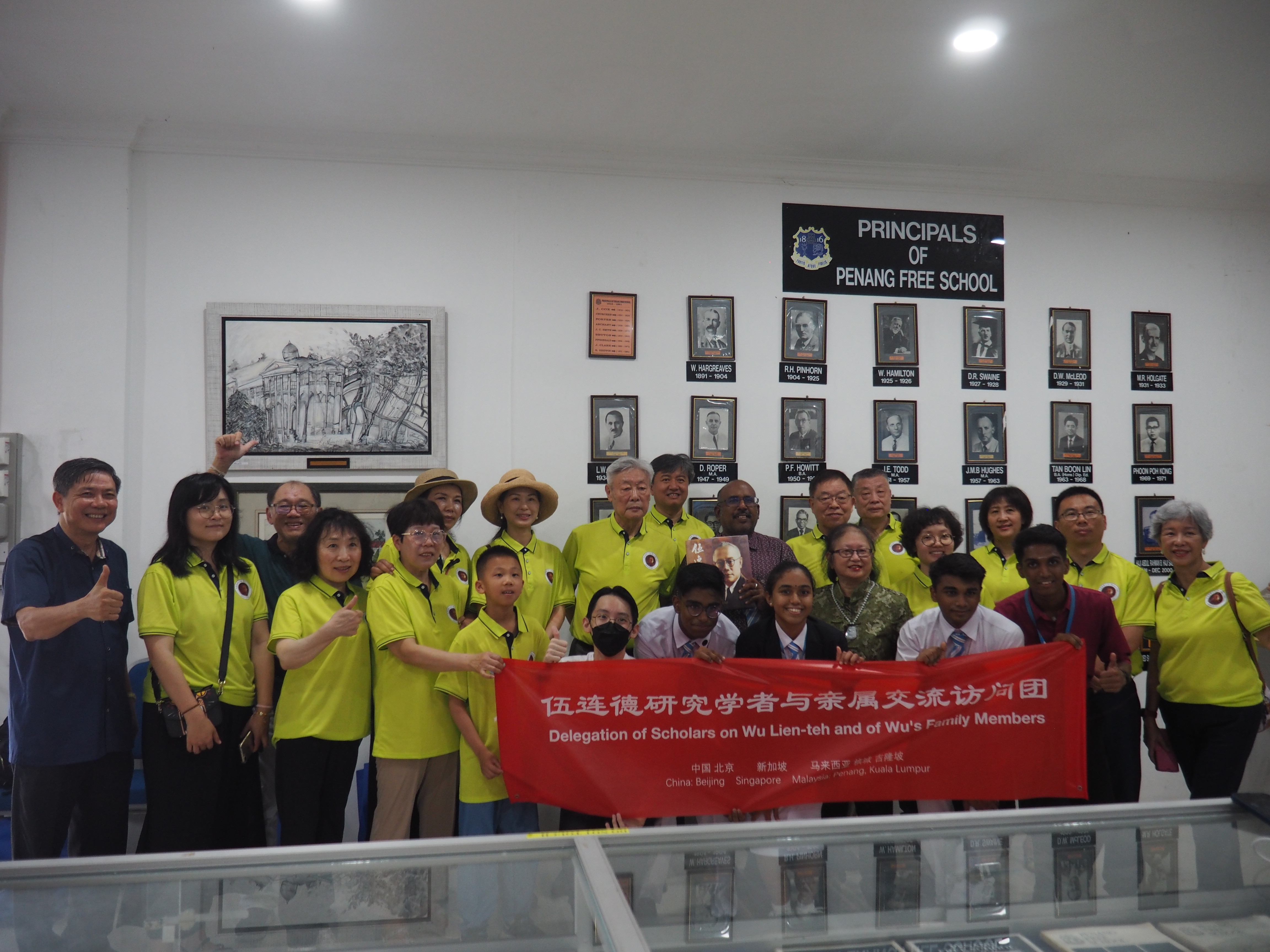
Several representatives from a Wu Lien-Teh research society based in Beijing, China, are currently visiting this region to learn more about Dr Wu Lien-Teh. Their travels had taken them to Singapore before they headed in Penang and from here, they will be proceeding to Ipoh and Kuala Lumpur in the next few days. Where else in Penang would they visit first but Penang Free School where Wu Lien-Teh (also known as Gnoh Lean Tuck during his schooldays) had his roots? He was the Head Prefect in 1894.

Having known of this visit more than a month ago from The Wu Lien-Teh Society Penang, I had arranged for the Free School Guiders to be available to show the Chinese visitors around the School. First stop was the Pinhorn Hall where they congregated at the back, careful not to disturb a school function taking place at the same time, contentedly paying attention to the wall plaques. Apart from the Head Boys plaque, a lot of their interest was also on the Queen's Scholars plaque where Gnoh Lean Tuck's name had featured.

From the Pinhorn Hall, they proceeded to the Archives Block to look at the precious Wu Lien-Teh books and photographs. They spent quite a while there and ended up exchanging souvenirs with the school's Senior Assistant, Leonard Selva. I have to thank the Free School Guiders and the School Prefects for spending some time with us. And also to the Headmaster, Syed Sultan, for permission to walk around the premises.