Wednesday, 27 March 2024

Sri Lanka: Day 4 (Nuwara Eliya)

The first thought when I awoke the next morning at Pensive Villa in Nuwara Eliya, a hill station in Sri Lanka, was whether I could watch the sun rise. We had slept rather late, having arrived from Kandy at about one o'clock in the morning and consuming our late night dinner before retiring. Looking out the window of our room, I uttered an "uh-oh" as the day was already breaking. But there was a saving grace. Right ahead of me was a reddening sky, which meant that the sun was not quite up yet. The reddish sky afforded me a perfect photo opportunity from the comfort of the room. I glanced at my Whatsapp messages and saw a picture from Bhante Aranagavesi. It was of the temperature in Nuwara Eliya and it registered 12 Celsius, I checked the temperature on my own mobile and it said nine Celsius! Twelve Celsius, nine Celsius. Which was correct, which was incorrect? These online temperature gauges couldn't be all too accurate, can they? This discrepancy made me question their accuracy. Nevertheless, the place was very cold by Penang's standards. By this time, my fellow travellers had started to stir from their rooms. Some chose to remain indoors in the living room but some of us ventured outdoors into the garden. Before long, however, all of us had crept indoors for breakfast.

Nuwara Eliya, nestled in Sri Lanka's Central Province, is renowned for its elevated position of 1,868 metres, earning it the title "City on the Plain" or "City of Light." This picturesque locale boasts a cool, temperate climate, making it the heart of Sri Lanka's tea production. Pidurutalagala, the island's tallest peak, watches over this city. Founded in 1846 by Samuel Baker, Nuwara Eliya became a haven for British civil servants and planters, earning the moniker "Little England." Its colonial past is evident in structures like Queen's Cottage and the Grand Hotel, and landmarks such as the Hill Club and St Andrew's Hotel. The city's allure extends to activities like fox hunting, polo and cricket, reminiscent of British leisure pursuits. Today, Nuwara Eliya's colonial charm persists with many buildings maintaining their historic features. The city's lush English-style gardens and estates add to its timeless appeal, making Nuwara Eliya a captivating destination steeped in history and natural beauty.

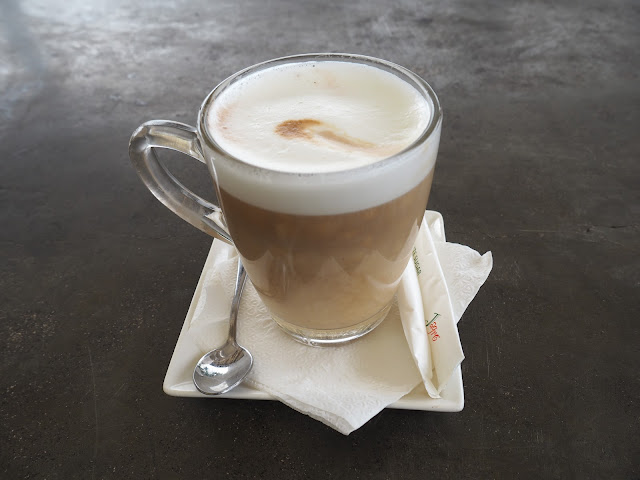
On Day Four of our Sri Lanka trip, we deviated from our usual visits to Buddhist temples and embarked on a day trip around Nuwara Eliya. Our first stop was at Simply Strawberries by Jagro, a charming strawberry cafe nestled in a picturesque setting reminiscent of New Zealand's countryside, minus the sheep. We indulged in delightful combinations of plump, juicy strawberries paired with ice cream, chocolate, cream and waffles. It was also where I savoured my first local latte coffee, four days into our Sri Lankan adventure. Interestingly, the coffee culture here seemed relatively subdued compared to what I had experienced elsewhere.

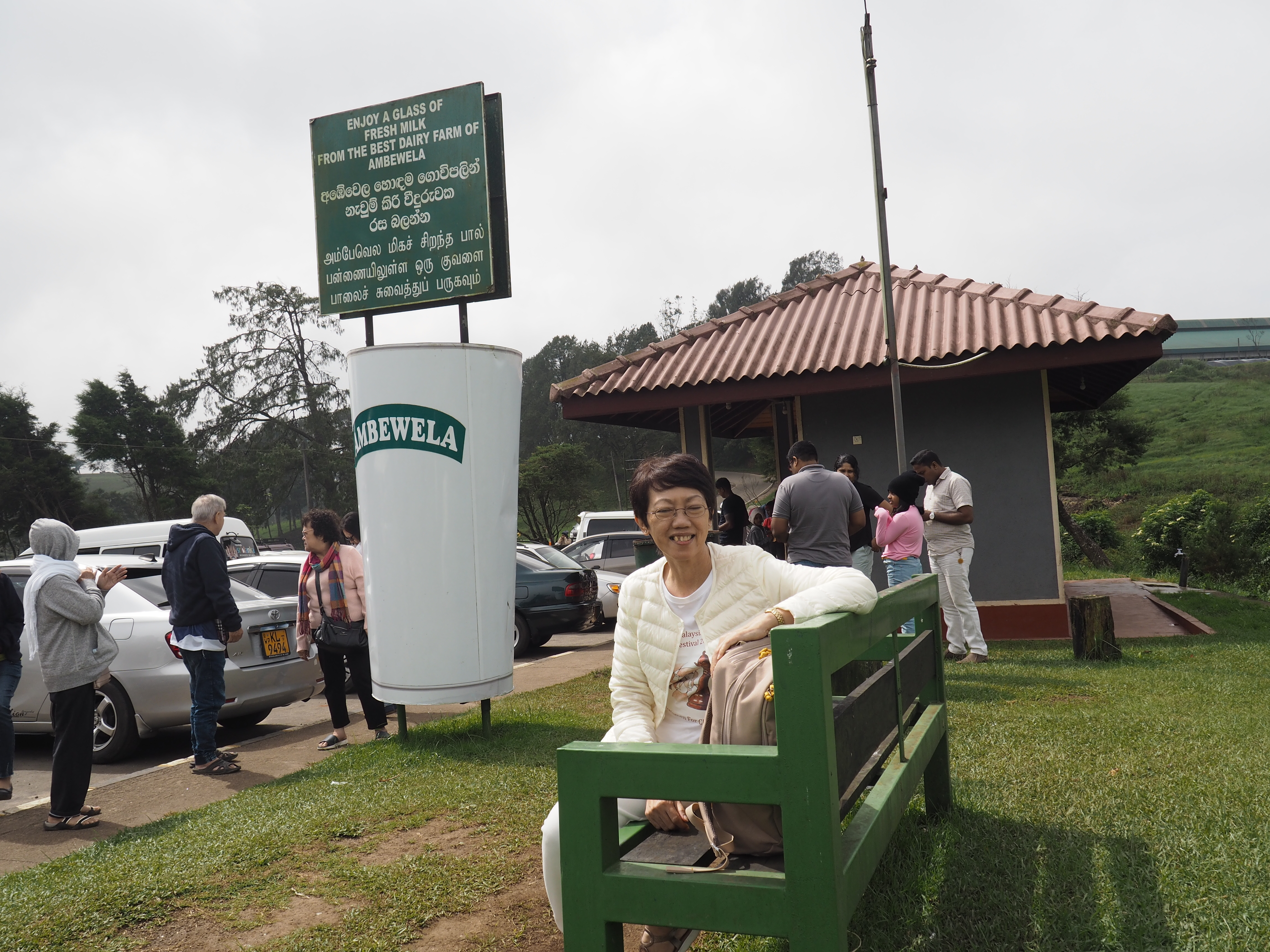
From the Café, we hopped on next to the Ambewela Farm, a journey that promised a glimpse into Sri Lanka's dairy industry. Before our bus and other vehicles could venture onto the long, windy road to the farm, there was the peculiar sanitisation process of wheels, ensuring biosecurity measures were adhered to. But why only wheels when all passengers had also stepped on all types of soil prior to entering the farm's facilities? Can't quite understand. As we meandered along, we passed by the Nuwara Eliya railway station and crossed the rail tracks. The nearby lake glistened under the sun. Arriving at the farm, vast pasturelands stretched as far as the eye could see. We were directed to a showcase shed to observe the cows. While most cows were at rest or chewing on straw, we encountered a few in the midst of calving. Although the birthing process extended beyond our stay, the experience served as a poignant reminder of the circle of life. 

All too soon, we had to bid farewell to Ambewela Farm. There was a long journey ahead of us. From Nuwara Eliya, the journey to Piliyandala would take at least six hours of non-stop travel but in all likelihood, I expected the bus to make several stops along the way. thereby prolonging the journey. This wasn't something everyone was looking forward to, but the uncomfortable journey had to be endured one way or another. True to expectations, there was a detour to the Damro Labookellie Tea Lounge. The name itself gave a hint of what we were searching for: Sri Lanka's celebrated Ceylon tea. The Damro Labookellie Tea Lounge was nestled amidst the scenic tea plantations of Labookellie. It offered a serene setting for visitors to indulge in the rich flavours of Ceylon tea such as traditional black teas, green teas and specialty blends unique to the region. We didn't have the luxury to truly unwind in the lounge or to sample the various types of tea because of time constraints but nevertheless, we still enjoyed a fresh cuppa before we went on our way, laden with our purchases.

There was a peculiar incident that happened on our way down from the Tea Lounge. At one stage of the journey, the road took on many twists and turns down the mountain. At one point, we noticed a man running beside the bus trying to sell us some flowers. Of course, nobody was interested and the bus sped away from him. But as the bus turned around the next bend, there was the man again, running beside the vehicle and thrusting the flower stalks against a window. The bus sped away again but yet at the next turn, there he was again running beside the bus with his flowers. This happened many times and we finally discovered how he took shortcuts down the mountain slopes to end up ahead of the bus as it negotiated the bends. But finally, the bends ended and we saw the last of this fellow. We wondered whether he dis this sort of thing every day for a living. It was dangerous but I wouldn't be surprised if the answer was a yes. He had the perseverance but probably not the brains. I mean, who would stop the bus just to buy flowers from him, huh?

Our last stop was quite unexpected. The bus driver pulled up at the side of the road. It seemed that the brake pads were overheating because he was stepping on the brakes while driving downhills. So we had to wait for some 30 minutes to let the brake pads cool down somewhat. In the meantime, we paid an adhoc visit to a small and very basic cafe connected to the Thanuja Hostel. Ordered some cakes there to while away the time. Up on the hill was a Hanuman (or Monkey God) temple but we didn't choose to go there. We were more concerned with hopping onto the bus again to continue with the journey.

Much of the latter part of the journey towards Piliyandala, which was a district in Sri Lanka's capital city of Colombo, was done in the dark. Normally quite a boring journey but at least, I was able to amuse myself by looking into the doorways of houses along the route. My intention was to see as much as possible of the home lives of the Sri Lankan people. Firstly, there are some households that do not keep their front doors closed before midnight. I do assume that they do lock up their houses before retiring. Secondly, most houses have lights in their porch area or outside the front door, although they were very dimly lit. Thirdly, the windows are largely closed up by nighttime. And finally, wherever i could see through the doorways, I hardly saw anyone in the living rooms. Perhaps they had retired to their bedrooms or moved further indoors. 

Finally close to midnight, we arrived at the Grand 7 Hotel & Restaurant, where much to our surprise, we found the hotel's kitchen still open. And the bigger surprise was that we were served a full dinner with all the works. The kitchen staff were still on duty to wait on us. We felt guilty that we were unable to finish all the food before us. Such a heavy meal at this time of the night. How could we hope to finish the food and then go to bed? Anyway, we were thankful for the big rooms and the comfortable beds to lay our heads. Tomorrow, in Piliyandala, another day of journeying would await us.


View of Pensive Villa from the road

Simply Strawberries by Jagro

These views were taken outside the Simply Strawberries Cafe


Strawberries picked fresh, plus fresh cream plus chocolate. What a morning treat!


My first cup of latte coffee in Sri Lanka, and it was almost my last too

Ambewela Farm

At the entrance into the vast grounds of the Ambewela Farm


The railway station is some eight kilometres from the Nuwara Eliya town centre


These were cattle at rest, not being milked, although at least two were in the process of calving


Damro Labookellie Tea Lounge


On our way to enjoy the beverage at the Tea Lounge

Okay, here we are, jawing over a cup of tea

Tea for all occasions. the place wasn't as empty as it looked in this picture


There's this fellow who ran down the road beside the bus. Dangerous stunt.


In my mind, this is a small Hindu temple in the middle of no-where

Only a roadside Hindu shrine. The main Hanuman temple was further up the slope


A typical provision shop


Saturday, 23 March 2024

Scam alert

Be very careful if this message is received on the mobile phone through SMS. It is a known scam that works on an unsuspecting person's greed and steals his credit card details. Clicking on the link in the SMS leads you to a page masquerading as a Maxis rewards page where you are lured that by paying only RM1.35, some attractive items can be redeemed. But then the next page leads you to key in your credit card details - your name, credit card number, expiration date and CVV - and these are then lost to the scammer. Before you know it, you'll have lost substantial money from your credit card account. The warning signs to look out for are, the SMS originating from an unknown number, the bogus Maxis landing page is wholly in Bahasa with no option to choose English, and only a limited range of products to redeem. So be warned and don't fall victim to personal greed. If it's too good to be true, it usually is.


Thursday, 21 March 2024

School tour

I took a small group of students on a magical mystery tour around Penang Free School yesterday. No, actually, it was only a tour of the school hall and the archives rooms. Doesn't sound like much, right? But it was much for them by my own reckoning. In the 70 to 80 minutes that I spent with them, I related the early history of the school from its days in Love Lane, Church Square, Farquhar Street and finally, Green Lane. Told them how the present school buildings came about. 

In the school hall, I described the various plaques on the wall, concentrating on the Donors plaque above the main door, as well as the plaques on the Queen's Scholars, Head Boys and Headmasters. Lesser things to say about the archives rooms but explained many of the publications - newsletters and magazines - as well as elaborating on the four frames that prominently highlighted Tunku Abdul Rahman, Dr Lim Chong Eu, Dr Wu Lien-Teh and P Ramlee. All in, it was an interesting morning for me, a real trip down memory lane in a way. 


Wednesday, 13 March 2024

1933 map

A very uncommon 1933 map of George Town issued in Singapore by Printers Limited (c1879-1940), a Singapore-based printing and publishing company active in the late 19th century and first half of the 20th century. Printers Ltd provided a range of commercial lithography and printing services ranging from business stationary to custom account books, to lithography. Among other projects, they issued the Singapore and Malayan Directory. Their offices were at 10 Collyer Quay, and their printing works on Trafalgar Street.


Tuesday, 12 March 2024

Another Bukit Choras story

An interesting story from Al-Jazeera about the discovery of an ancient Buddhist stupa in Bukit Choras on the northern slopes of Kedah Peak or Mount Jerai. (NOTE: This discovery is not new. Previously, there had been stories in New Straits Times, Sinar Daily and the Star last September. Read my blog here for the details.) More than anything else, this story reemphased that Old Kedah was the hub of an ancient kingdom in the northern part of the peninsula; an ancient kingdom that was estimated as at least 1,200 years old. Older than perhaps Angkor Wat in Cambodia or even Borobudur in Java. The Kedah government should be proud that they are the site of possibly the oldest known civilisation in this part of the world, much older than Malacca. People from India, the Middle East and China had arrived here to trade, also bringing with them their early beliefs which were Hinduism and Buddhism, before they were later replaced by Islam. Embrace this fact and heritage, and do not be so narrow-minded and dogmatic to ignore this significant moment in the country's history. 

Ancient find reveals new evidence of Malaysia’s multicultural past 

Archaeologists in northwest Malaysia find new evidence of the region’s role as a thriving multicultural trading hub. 

 After archaeologists cleared vegetation at the top of Bukit Choras they discovered a Buddhist stupa [Courtesy of Nasha Rodziadi Khaw]

By Marco Ferrarese
Published On 10 Mar 2024 

Kedah, Malaysia – Until six months ago, none of the inhabitants of the village of Bukit Choras, set amid rice fields near the steep and lush hill of the same name in northwestern Malaysia, had any idea they had been living next to an archaeological wonder all their lives.

It was only after a team of 11 researchers cleared the thick bushes and secondary jungle from the top of the hill, and gently scraped away at the soil that a missing piece of Southeast Asian history was revealed.

The 1,200-year-old Buddhist stupa of Bukit Choras was discovered last August in Malaysia’s Bujang Valley – a river basin scattered with several clusters of protohistoric sites in the country’s northwestern Kedah state.

The stupa is the best preserved in the country and experts say it could hold the key to Malaysia’s long history of multiculturalism.

“This site is an anomaly because it stands all by itself,” Nasha Rodziadi Khaw told Al Jazeera. Nasha is the chief researcher of the team from the University of Science Malaysia’s Global Archaeology Research Centre (CGAR) in the northwestern island of Penang, who supervised the excavation between August 28 and September 12 last year.

Bukit Choras is situated near the small town of Yan on Kedah’s southern coast about 370km north of the capital, Kuala Lumpur.

Nasha Rodziadi Khaw led the team of scientists who unearthed Bukit Choras’s stupa [Kit Yeng Chan/Al Jazeera] 

Unlike the 184 archaeological sites previously identified in the Bujang Valley, which lie to the south, the stupa is isolated on the northern side of Mount Jerai, which was once a cape and a pivotal navigation point for seafaring traders who ventured to this part of the world from as far as the Arabian peninsula.

“We are still not sure of Bukit Choras’s function. It may have been a military garrison or coastal trade outpost, but we need to do further excavation [to assess]. Based on our preliminary findings, it shows plenty of similarities with other sites found in Java and Sumatra, Indonesia,” said Nasha, whose team will continue to work at the site throughout the first half of 2024.

A forlorn discovery

According to Nasha, Bukit Choras was first reported in 1850 by a British officer looking for treasures, and then, in 1937, briefly studied by another British scholar, HG Quaritch Wales. Wales undertook some minor excavations, but only reported finding a squarish Buddhist stupa, taking note of its measurements. He never provided any illustration or plate for the site.

Nearly 50 years later, in 1984, the then-director of the Bujang Valley Archaeological Museum returned to Bukit Choras to do some site cleaning and documentation, but the site remained largely undisturbed.

“I realised that nobody had done proper investigation [since then] and managed to get a fund to survey the site in 2017,” Nasha told Al Jazeera.

“We used electronic waves to do physical detection of what was hidden underground and found there were some big structures underneath.”

Nasha received more funding from Malaysia’s Ministry of Higher Education to conduct proper excavations in 2022, and his team was stunned to discover how well-preserved the site was compared with those unearthed in the Bujang Valley between the 1930s and 1950s – some of which had deteriorated because of erosion, human activities and even accidental destruction.

“At first we only excavated 40 percent of the whole Bukit Choras site, finding a stupa about nine metres long,” said Nasha. “But the most important discovery was two stucco statues of Buddha in good condition that have never been found in the area before.”

Stucco, Nasha explained, was thought to only be found in Java and Sumatra in neighbouring Indonesia, as well as in India, at the time.

Ancient ties 

Placed in two niches together with an inscription in Pallava (the language of the Pallava Dynasty that ruled in South India between the 3rd and 8th century CE), Bukit Choras’s two Buddha statues have architectural features resembling those of other ancient artefacts from the Srivijaya kingdom that prospered between the 7th and 11th centuries CE, in an area from southern Thailand, through the Malay peninsula and into Java. The statues are now being studied and restored at CGAR on Penang island.

“The discovery of two still intact, human size statues and the inscription is very significant for further studies,” Mohd Azmi, the commissioner of Malaysia’s National Heritage Department, told Al Jazeera. “This shows that the site has not been disturbed and has the potential to give new evidence on Ancient Kedah’s history.”

Excavation trenches at the Sungai Batu Archaeological Complex [Kit Yeng Chan/Al Jazeera] 

The discoveries in the Bujang Valley testify to an ancient civilisation that archaeologists refer to as the “Ancient Kedah Kingdom”. It prospered between the 2nd and the 14th century CE, stretching across the northwestern coast of the Malay peninsula and into Thailand predating the arrival of Islam in the region.

Ancient Kedah grew rich on international trade as well as the production of iron and glass beads, prospering as a multiethnic and multireligious ancient Southeast Asian polity where residents and foreign traders lived together.

Nasha points out that findings in the area suggest that for centuries, traders from China, India and even the Middle East came to the area to do business – and were often forced to spend long spells in Kedah when the harsh monsoon seasons made sailing back home impossible.

Temples and artefacts were built by local labourers mixing foreign architectural motifs and knowledge with two main influences.

“First is Buddhism, classified in areas such as Sungai Mas, Kuala Muda, and Sungai Batu in Semeling, plus the most recent being the temple site at Bukit Choras,” explained Asyaari Muhamad, a senior archaeologist and the director of the Institute of the Malay World & Civilisation at the Universiti Kebangsaan Malaysia, referring to some of the Bujang Valley sites.

“The rest, such as the archaeological site in the Pengkalan Bujang complex [near the village of] Merbok, received Hindu influences. This classification is [based on] the discovery of artefacts and temple structures symbolising the religious beliefs or influences at that time,” he said.

Promoting multiculturalism

All of Ancient Kedah’s temples functioned as places of worship mostly for the mixed population of migrant traders and workers.

“In [the area of] Sungai Bujang, for example, most of the temples are clustered together near the main trading area and used to cater for the religious needs of the traders, while in Sungai Muda, they catered to the traders and workers of the local glass bead and pottery-making sites,” said Nasha.

Tuyeres, or air conduits, for the ancient iron smelting sites whose remains were found at Sungai Batu Archaeological Complex [Kit Yeng Chan/Al Jazeera] 

“We believe it was the same in Sungai Batu, the main site for Ancient Kedah’s iron smelting furnaces, where we found evidence of a community and its temples. But in Bukit Choras, proof of economic activities or industry has not yet been found,” he said.

Archaeological discoveries suggest that while Ancient Kedah thrived for centuries, it went into decline when climate transformed the large maritime bay and accessible riverways leading to the iron smelting site of Sungai Batu into mangrove and tidal swamps that were impassable to ships.

“Multiculturalism is not new in the Malay peninsula and Ancient Kedah,” added Nasha. “It started with trade in the 2nd century, when there was an increase of connectivity between China, India and Southeast Asia, and continued well into the Melaka kingdom, which we know was also a multicultural society, and continues today.” 

The Malaysia of the 21st century is also a multiethnic and multireligious Southeast Asian nation made up of a majority of Malay Muslims, followed by Chinese, Indians and more than 50 other ethnic groups living across the peninsula and the northern half of the island of Borneo in the states of Sarawak and Sabah.

Asyaari said it was important for researchers to collaborate and reach a better understanding of the origins of civilisations in and beyond the Malay peninsula.

“Any statements about new or previous findings need to be carefully examined so that […] a theory, discovery, and the results of a study do not become an issue and controversial in nature,” he said.

SOURCE: AL JAZEERA


Sunday, 10 March 2024

2024 Wu Lien-Teh public lecture

Born on 10 March 1879, Dr Wu Lien-Teh would have been 145 years old today. 

As a celebration of his life, The Dr Wu Lien-Teh Society organised the eighth edition of the Wu Lien-Teh annual public lectures at the Penang Institute yesterday. The speaker was Prof Dato Dr Adeeba Kamarulzaman, the President and Pro Vice-Chancellor of Monash University Malaysia. She was also the third recipient of the Dr Wu Lien-Teh Award for Leadership in Public Health.

Prior to her appointment at Monash University Malaysia, Adeeba was Dean of the Faculty of Medicine, University Malaya. She continues to be an Honorary Professor at University Malaya and as Adjunct Associate Professor at Yale University, USA. An infectious diseases physician by training, she is a passionate advocate for social justice, especially when it pertains to HIV prevention, treatment and care and drug policies. She presently serves as the Chairman of the Malaysian AIDS Foundation and is the Immediate Past President of the International AIDS Society. She is also the founding Chair of ROSE Foundation, an organisation that is committed to eliminating cervical cancer in Malaysia and regionally. At the international level, Adeeba has been an advisor to numerous WHO, UNAIDS and UNODC committees on HIV/AIDS and substance use. She is presently Vice-Chair of WHO’s Science Council and is a member of the Global Commission on Drug Policy and the Global Council on Inequalities, HIV and Pandemics. Her achievements are recognised through several national and international awards including as a two-time recipient of the prestigious Merdeka Award and recently, as Tokoh Akademik Negara. In April 2015 she was honoured with a Doctor of Laws (honoris causa) from her alma mater, Monash University, for her role as a health advocate and contributions to medicine.

Pre-lecture ceremony. Anwar Fazal receiving a mock cheque from Chan Looi Tat who was representing Cheah Cheng Hye
“All awards are special but this Dr Wu Lien-Teh Award is extra special because of who Dr Wu was and how it so closely relates to my career as an infectious disease physician and public health practitioner. Dr Wu was also a trailblazer - so to be recognised in his name is a tremendous honour indeed.”

Adeeba with Anwar Fazal and the committee members of The Wu Lien-Teh Society


Friday, 8 March 2024

Selfishism

Facebook reminded me today that nine years ago I had shared this picture of tecoma blooms along my road. Three trees in full bloom in front of me and one more right behind me. Blooms in hues of white and pink. Sadly, out of the four tecoma trees, only one remains standing today, and that one is outside my house. The other three have been chopped down over the years. It is rather poignant that while people wants to green the earth, many of them prefer greenery everywhere except in front of their own homes. How selfish can that be?


Thursday, 7 March 2024

Forward to the past, part 2

My old classmate, Lim Siang Jin, had held his first solo photography exhibition, “Our Legacy: Landmark Memories of Penang Free School”, over six days last September/October at The Old Frees’ Association in conjunction with the OFA’s Centenary celebrations. He is now organising a second exhibition of the same black-and-white photographs in Kuala Lumpur too. 

The exhibition of 31 photos, which began on the first of March, is ongoing until the end of the month at his own gallery, aptly called Jin’s Art Gallery, which is located at Unit A-3-17, Centrio Pantai Hillpark, 1 Jalan Pantai Murni, 59200 Kuala Lumpur. Opening hours on weekends are from 10am to 5pm, and by appointment on weekdays. They are to call 0192219680.

Anyone who had viewed his first exhibition in Penang will know that the photos will appeal to the Old 
Frees of any denomination. They are bound to evoke a lot of nostalgia, especially among the ones who have located to the Klang Valley, and there are countless! If they haven't returned to their alma mater for a very long time, now is the time to reconnect with their old schooldays. Do bring your old classmates and schoolmates to the exhibition. 

By the way, the photos are available for sale. I know of at least 10 people who have already purchased them and they are now displayed proudly in their living rooms. These six prints are among the 31 on display in the gallery. Each picture tells a story and the commentaries are by Siang Jin.

WELCOME. Penang Free School remains true to its name – to be “free”, to admit students irrespective of class, race and religion. This has been one of its distinguishing features for over 200 years – since its founding in 1816. All it asks of its wards in return are to be strong and faithful to the school’s ideals of overall excellence and multiculturalism.

AWESTRUCK. Many a freshie, like me in 1966, find these arches of the Pinhorn Hall intimidating and an awesome sight. They never fail to impress — even now. I like to see the hall empty with its main door wide open, like a grand tunnel welcoming activity. From resplendent speech days to the rigours of badminton practice. From timeless Shakespearean plays to captivating fashion shows.

PERPLEXING. For the first few weeks, indeed months, at school, everything looked and sounded different. Our first-year experience was amplified by the school’s Sesquicentenary (or 150th anniversary). We had joined the school with grand misconceptions, like seeing shadows on Plato’s “Cave”. As we moved from year to year, we gradually appreciated its essential worth – as an assiduous mentor to prepare us for our lives ahead.

MAGNANIMOUS. This is the Angsana under which we gathered before school in our first year in 1966. It gave us shelter and provided space to engage in small talk before the rush of class and other planned activities. It reminds me of many teachers, their zeal to develop as well as shelter us from the worst of the world. That did not mean we were spared punishment, a favourite being running to the far-end of the field and back.

POTENT. This is Free School in a solid but dynamic posture with clouds pushing right. This was once its hub, housing the headmaster’s office, a grand porch to receive VIPs and all, the school clock, and above all, visually, a commanding tower. This image leaves a bit to be desired; the top right has little texture. To me, it is a metaphor for the unfulfilled, of dreams and potential. One thing’s for sure: The school gave us a potent sense of idealism anchored to its grand design.

HEARTFELT. The sound of the school bell touches our hearts from day one. It is distant though, hanging 40ft above the ground in a simple housing. Yet it tolls for everyone, not just for starts and ends of rituals. It rings in my memories, for example, of decorum, order and respect for traditions — after its deep clangs, the hushed silence in the grand hall with 1,500 awaiting the headmaster’s entrance and the distinct sounds of his footfalls. This has been etched in my mind forever.


Wednesday, 6 March 2024

Facebook was down

Facebook was down last night. Affected globally. Locally at about 11.30pm, I was suddenly locked out from my facebook account. The first thing that came to my mind was, oh gawd, someone's trying to hack into my account. But I was rather cool about the matter. I had always believed that my security measures were good enough. If anyone wanted to steal my facebook account, the first thing I would do - and this was what I did - was to change my password. 

Unfortunately, all attempts came to nought. I hit a wall when I wanted facebook send their six-digit code to me. On several tries, I did not receive any SMS message from facebook. Even right until this morning, no SMS from facebook. On several other tries, I asked facebook to send the code to me via email. I had registered two different addresses with facebook, one as a secondary back-up, and to much of my surprise, facebook sent different codes to the two email addresses. Now, which one should I use? I tried both, and both were rejected. That's very silly, isn't it? I should be receiving the same code through the two email addresses, not different codes. 

Anyway, I awoke this morning to learn that the problem has been resolved. I could now access my account on my mobile phone and the desktop computer. What a relief, although there's yet to be an explanation from facebook on what exactly hit them.