Showing posts with label NZ holidays. Show all posts

Monday, 3 December 2012

NZ travelogue: The 2011 devastation in Christchurch

So there we were, my wife and I being led by my old chess friend, Alan, into the centre of earthquake-hit Christchurch, as near as we could possibly get to the city's Central Business District.

All along the way, we were a bit awestruck by the amount of destruction to the buildings. We could imagine how much people's lives had been changed by the earthquake. It's not only the destruction, which was so widespread.

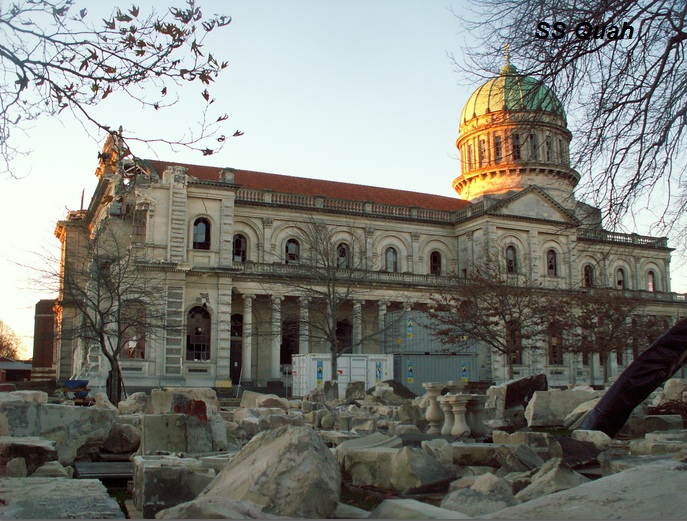
We stopped by the Cathedral of the Blessed Sacrament. Clearly, this was a very impressive building but it was now in ruins. Two of the domes had collapsed but there was still one dome basking proudly in the early afternoon sun. Just next to the cathedral, the Music Centre of Christchurch had also been affected.


We parked at Cashel Street and walked towards the Bridge of Remembrance. We crossed the Avon River. In happier times, people used to enjoy punting along the river. While we were there, all such activities had ground to a halt, including the tram service. We walked up to the barricade and peered into the distance. We could see the Hotel Grand Chancellor, once the city's tallest building. It survived the first earthquake in 2010 but after the tremblor in February 2011, it was shut down for good and would be demolished. I hear that it has been brought down totally by May this year.


We walked along the river bank towards Worcester Boulevard. More destruction everywhere we turned, such as this building:


We stopped at the Boulevard and looked into the CBD. Beyond the barricade on the left was the destroyed Municipal Chambers.


In the distance was all that remained of the Anglican Cathedral of Christchurch. Its most well-known features, the tower and spire on the building's left, had been reduced to rubble. I hear that until today, the whole building is still being dismantled slowly amidst opposition from groups that included the UNESCO world heritage centre.


After this, I told Alan, "Well, enough is enough. We came here hoping to see the happy side of Christchurch but instead, this is the unfortunate side of the city." My wife and I really hope that the city can recover fast from the earthquakes.


Monday, 19 November 2012

NZ travelogue: Around Christchurch with Alan


Meet Alan, one of my old chess kaki from the Penang Chess Association days. I knew him back in the 1990s when he was still working at Hewlett Packard in Penang. Towards the end of the decade, he decided to pack his bags and move his family to Christchurch in New Zealand.

When my wife and I visited the South Island last year, we re-established contact, and we still do keep in touch till today. It was good to catch up with him again. And getting to know his family. The son, born in Penang and last seen as a toddler, has grown up a teenager. The daughter, born in New Zealand, completes the family.

On the last day of our vacation in New Zealand, we caught up face-to-face at the Riccarton Bush. Alan was little changed except he looked a bit stockier. Could be the additional layers of clothes to ward off the anticipated autumn chill. (Except that New Zealand was experiencing some weird weather pattern in 2011. Right until June, the weather was warm enough to fool some trees into bearing flowers when they should not.)

We spent the rest of the day together until it was time for us to catch the AirAsia X flight back to Kuala Lumpur. Speaking of AirAsia X, I am quite disappointed that the long-haul budget airline had decided to terminate its services to Christchurch. I'm sure it was not because of some silly excuse like not making money on this route. On the contrary, I believe the airline was doing well as it brought plane loads of Malaysians and other tourists directly to the South Island. Malaysia Airlines only fly to Auckland.

Maybe there was some other more sinister reason which I'm speculating, like Malaysia Airlines persuading AirAsia X to stop competing with them on this sector when the two airlines were still working together about a year ago. Maybe, in return for AirAsia X's getting landing rights to Sydney, they were persuaded to give up Christchurch. Anyhow, Christchurch wasn't the only long-haul destination now off the AirAsia X horizon. Even their flights to London and Paris have disappeared.

But this digression aside, I suppose Alan must have been quite pleased with the small diversion in his life. Seeing us and well as some other of his friends was like catching up with news from the homeland. I ploughed him with news on the political developments in the country, and especially the positive news emanating from Penang. Hope he salivated and thought about coming here for a holiday sometime in the future.


When we left the Riccarton Bush, we ended up at the Foo San Teahouse in Rountree Street for some Malaysian dimsum. Alan told me that the family running this joint was from Ipoh. When we arrived, the place was packed with people. Mostly Asians (Malaysians and Singaporeans?) but there were other people there too.


Somehow, we managed to grab a table with the six of us crammed round it. The food wasn't very impressive but hey, after being away for slightly more than a week, eating Malaysian dimsum was a welcome change to our diet.


Alan suggested that we stopped by his house in Christchurch but before we did, there was a small diversion to the Raewards Fresh warehouse to pick up some fresh produce. "We'd normally come here weekly to pick up our provisions," he explained. Yah, okay, the warehouse was an eye opener. We hadn't seen so much abundance of New Zealand vegetables, fruits and meat in one central location before. Produce of all shapes, sizes and colours. Some going for ridiculously cheap prices although there were others which to me, were rather expensive.


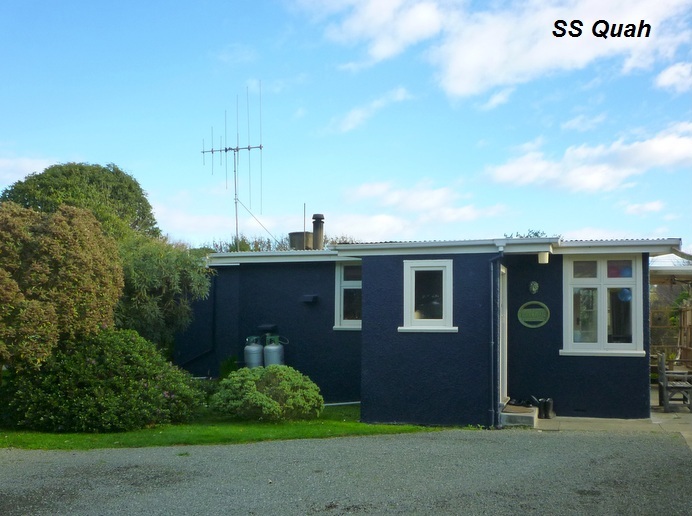
This, below, is Alan's house at the northern part of Christchurch. An impressive double-storey building quite unlike the typically NZ houses I noticed everywhere else. "We were fortunate not to be affected during the earthquake," he told me. The whole of Christchurch had rocked and rolled when the earthquake struck and the areas most devastated were the central business district and towards Lyttleton to the south-east.


I walked around. I commented that he was a bit of a green thumb. I could see even lengkuas plants growing there. "Oh, they'll die off soon enough. It's because of the balmy weather we're experiencing now that they are still surviving. They are being fooled by the weather. When it gets chillier and frost sets in, all these will be killed off," he said.


I found out later that he wasn't joking. By July that year, winter had really settled upon the South Island and Christchurch was buried under a thick layer of snow.

Soon, we decided to go for a drive into the Christchurch CBD. "We'll it is impossible to drive into the CBD," Alan explained, "as the whole area has been cordoned off. We can only go around and walk as near as possible to the barricades." This was a real pity as one of my original intentions, when I bought the flight tickets to Christchurch - and this was way before the earthquake - was to go admire the Christchurch Cathedral and jump on board their tramcars.


The Wok On In Cafe in Kendal Avenue was our final destination in Christchurch. We all trooped there for dinner. Alan had a little surprise for us.


"Here, meet Ah Hock. He's from Penang and he owns this place," Alan said, and it was true. If I'm not mistaken, Ah Hock's roots are in the Noordin Street section of George Town or its whereabouts. He still goes back often to see his folks and presumably, to pick up more culinary secrets.


He and his staff cooked up a mean meal in Christchurch and we enjoyed ourselves with his improvised versions of Char Hor Fun, Char Koay Teow, Wantan Mee and Nasi Lemak. As far as we were concerned, the food was different but still close enough to the real stuff back home. His little cafe was just about three minutes away from the Christchurch airport and so, it was quite convenient for us to have a slow and hearty meal while we killed time before leaving for the airport. Here's part of the menu. Quite a wide variety of items.


Soon, we really had to leave. And with great reluctance, I had to say goodbye to Alan and his family. Alan, I hope to be able to meet up with you again one day, if not in Christchurch, then perhaps in Penang, Ipoh, Kuala Lumpur or Kuching. Keep in touch!


Monday, 24 September 2012

NZ travelogue: the Riccarton Bush

After the Fo Guang Shan Buddhist temple in Christchurch, the Riccarton Bush was our next stop in the itinerary. Originally, I had wanted to visit the farmer's market but found out that it was open only on a Saturday morning. As we would only arrive in Christchurch on Saturday evening, that means that we would have missed it already.

Nevertheless come Sunday morning, we still decided to visit the Riccarton Bush. This place is the largest surviving remnant of the forests that once covered the Canterbury Plains. Our destination was the Riccarton House. Although the building was closed due to the Christchurch earthquake, the vast grounds were still accessible to people and it was there that an artisan's market would be held every Sunday.

Pathway leading up to Riccarton House

Getting there was quite easy and finding a parking lot wasn't any problem. A leisurely walk among the tall kahikatea trees took us to Riccarton House. Stalls were already opened and people were everywhere .... eating, shopping or just whiling away time sitting by the banks of the Avon River. We did all three.

Riccarton House

Some of the stalls selling a wide variety of stuff 

People milling every where

Although the house was out of bounds, it did not stop people from occupying the verandah.

Others were enjoying the outdoor sun in a nippy autumn weather

Nearby, a band was providing entertainment

Directly opposite the house was the Avon River

We strolled around the grounds and came across Deans Cottage, built by pioneering Scottish brothers, William and John Deans, in 1843. This is the oldest building on the Canterbury Plains, built from timber cut in the Riccarton Bush and pit-sawn into boards. The brothers had lived here until their early and tragic deaths. William drowned in a shipwreck in 1851 while John died from tuberculosis in this cottage in 1854. The interior of the cottage has been turned into a museum to showcase the brothers' living conditions in the 19th century.


Saturday, 7 July 2012

NZ travelogue: the Fo Guang Shan temple

My wife was visibly surprised when I pulled up at the Fo Guang Shan International Buddhist Association NZ at the junction of Harakeke Street and Riccarton Road in Christchurch, New Zealand. Frankly, so was I. I had not expected to see such an impressive Buddhist building in the heart of the city but here it was!


But I have got to say that this was a Buddhist temple with a difference. It looked totally unlike others that I have seen. You need to throw away your pre-conceived idea of how Chinese temples look like traditionally and look at this one with a fresh eye and an open mind. The concept of this building in Christchurch was modernity and the design was architecturally appealing.

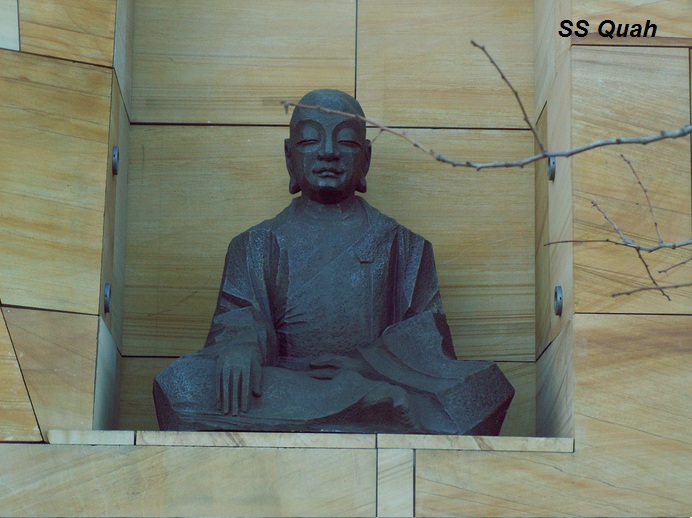
After we parked the car, we went round to the front of the building. There were three stone statues to greet visitors. One was obviously that of a Buddhist monk sitting in deep meditation, no doubt about that, but the other two required a stretch of the imagination before we could accept that they were indeed a modern artistic interpretation of some other Buddhist concepts.


The interior was also equally interesting. On the upper floor was the huge shrine hall and a long corridor running deep along the length of the building while the lower floor housed a cafe as well as some exhibition rooms.


When we visited, there was an exhibition of calligraphy paintings by the 82-year-old founder abbot, Venerable Master Hsing Yun. This old monk, it seemed, was a master of the one-stroke calligraphy, that is to say, every piece of his work would have to be completed in a single continuous movement. He was forced into mastering this technique because of failing eye sight.


During the Christchurch 6.3-magnitude earthquake in 2011 when large areas of the central business district of the city were destroyed, the Fo Guang Shan immediately reached out to the city and the victims by providing a great community service. Their earthquake relief service centre gave free hot meals, free basic medical supplies and cleaning items and free Internet access to the victims irrespective of race or religion. In addition, there was access to the temple's main shrine for anyone who needed spiritual counselling.


So that's it; our visit to the Fo Guang Shan Buddhist temple in Christchurch. From here, it was next to the Riccarton Bush where a Sunday morning market was going on. More later....


Monday, 11 June 2012

NZ travelogue: Day 7

Day Seven of our stay in New Zealand's South Island was the final day of our vacation. After having driven from Christchurch to Queenstown via Twizel and Wanaka, and then to Dunedin and Oamaru, we were back in Christchurch.

We had travelled and taken in the sights of the snow-covered mountains as well as the sea (although we never got the chance to touch neither snow nor sea water.) Now what was left for us was to explore the biggest city in the South Island, a city that had been ravaged by earthquake, and we had a full day to do so. For that, I have to thank an old friend and chess kaki, Alan Phang, who had settled down in New Zealand some 14 years earlier.


But first, having arrived from Oamaru at dusk the day before, we checked in at the Christchurch Motel in Riccarton. This would be our final accommodation. Quite comfortable accommodation, although the room was rather small. We could park the car directly outside the room. We tidied up and then decided to go walk along the main road in front of the hotel. The hotel manager had told us that there were some eateries down the road, perhaps some 20 minutes away.

We walked, crossing one road junction after another but we never looked like coming across a restaurant interesting enough for us. Finally, we went into a dairy shop. Seeing that the proprietress was Indian, we asked her for the nearest Indian food. "It's that way," she pointed in the direction that we had come from. "Go down the road and turn right into Ilam Road. You'll find the restaurant on the left. You can walk but it's going to take you at least a good half an hour to get there." She glanced up at the clock and added, "I wouldn't recommend it."

So we turned back, collected the car and headed off in the direction that she had given us. Sure enough, we soon pulled up at the Tandoori Palace. I was quite surprised that the restaurant was quite packed. We did not want to wait and so we went to their take-away section. It was also filled with people.


Their food must indeed be good. One way or another, we would have to wait. But this time, we just didn't feel like searching for more places to eat and we decided to just order some naan bread and curry from their take-away menu. I took a glance at the menu and straight away, added their palak paneer, spinach with generous chunks of cottage cheese, to our order. I just want to say here that I did not regret ordering it. It was a great dish and I'm saying it not because I was famished!


Here are two pictures of the Christchurch Motel in the morning before we checked out. We were due to meet up with Alan at the Riccarton Bush but before then, I had a surprise for my wife: an unannounced visit to an unexpected place, but more about that later.


Wednesday, 30 May 2012

How to learn more about the history of New Zealand

Located in the southwestern Pacific Ocean near Australia, New Zealand is a small island country that became an independent dominion in 1907. Being a rather isolated country, it can be hard to understand the impact New Zealand has had in the Pacific region. As a country that first started as a colonial power, the emotional impact of social injustice on its indigenous people can also hinder study. However, New Zealand is a fascinating place and learning its history is worth the effort. Here are several ways to start learning about New Zealand's rich past.

Study the Maori People

The Maori are the indigenous Polynesian people of New Zealand. Isolated from the rest of the world, they have a unique culture with their own language, rich mythology, distinctive crafts and performing arts. The arrival of Europeans in the 17th century took a toll on their people and way of life. In recent history, descendents of the Maori fought for their rights and now make up about 15 percent of New Zealand's population. Learning about these indigenous people is a great way to start learning about the history of New Zealand.

Study New Zealand's Holidays and Events

The holidays and events of New Zealand reflect their culture and highlight historical events. Understanding what happened during these events and the reason why New Zealanders celebrate them is a great way to start delving into their history.

Study Online

For those interested in learning about New Zealand's history in a course setting, consider getting information about history classes online here to gain a better understanding.

Check Out New Zealand History Online

New Zealand History Online was initially launched by the Minister of Internal Affairs – the Hon. Jack Elder – in 1999. The site provides information and resources from the History Group of the Ministry for Culture and Heritage, located in Wellington, New Zealand. Categories include culture and society, politics and government, and war and society. The site also has guides, links to external websites, and material for history students and teachers.


Thursday, 24 May 2012

NZ travelogue: Little Farm Homestay in Oamaru

I didn't expect my wife to catch me having a quiet conversation with our hostess, Julie Barclay, before breakfast at The Little Farm Homestay in Oamaru, New Zealand. We had just returned from watching the penguins at the Bushy Beach Scenic Reserve and we were famished. We arrived back at the house just as Julie was putting the finishing touches on our breakfast and I was curious to see what she had prepared for us.

We were quite surprised by the hearty portions before us. I had thought that our breakfast couldn't be better than the one we ate at the Albatross Inn just the day before but obviously, I was wrong. Delightfully wrong, as it turned out because this breakfast topped everything else that we had.


As can be seen from the picture, there was quite a lot of food on the plate. And as we ate, Julie was always nearby to engage us in conversation about our visit to her country. We shared a lot of information. This is definitely one of the better examples of homestay programmes. My wife wasn't disappointed with the stay here.

All too soon, we had to leave but not before we undertook a quick look around her compound. It is really a place to relax if you have all the time in the world.


And finally, here is Saw See with Julie. Hopefully, our paths may cross again one day.


Thursday, 10 May 2012

NZ travelogue: Oamaru's historical precinct

The historic precinct was the original commercial district of Oamaru. The old buildings were built from locally quarried limestone, the Oamaru whitestone. Today, the area is recognised as having New Zealand's most complete collection of Queen Victoria-era buildings. When we arrived at the historic precinct in the morning, there was hardly a handful of people on the streets. We were a bit puzzled; eleven o'clock can't be too early, can it? However, the shops were already open.

This was one of more interesting metal sculptures lining Tyne Street, which leads on to Bushy Beach where we had watched the penguins several hours earlier.

This Victorian building is one of many along Tyne Street. Somehow, it reminded me so much of home in George Town, Penang, or maybe I was starting to get a little homesick looking at these buildings.

Awesome-looking vintage car (junk?) on display in the Grainstore Gallery. We entered the building from Tyne Street, walked through its length, and emerged into Harbour Street.

Our next stop was the Harbour Street Market at the Connell & Clowes building. Apart from the vendors, we were the only ones there. We browsed round the stalls and I picked up two second-hand compact discs selling for NZD4 each.

Saw See was bedazzled by the items at the Harbour Street Market but ended up not buying anything. Couldn't make up her mind but actually, they were not very practical.

The Lanes Emulsion building now houses a bakery. We were too full after a hearty breakfast at The Little Farm Homestay and did not try the pork pie here. Heard that it was good. Well, too bad for us...

Only the brave would dare try the unfettered penny farthings at a shop at the other end of Harbour Street. We didn't know about that shop then, so thought that the photo op here was good enough.

And finally, we ended up at the Loan & Merc, a restaurant-cum-pub at the far end of Harbour Street. The establishment occupies the ground floor of the original Loan & Mercantile building, together with some displays of furniture from the Victorian era, while the upper floor of the building features an art gallery.

One last look at the historical precinct before we headed out of Oamaru.