Monday, 24 February 2025

The Pagar Tras church

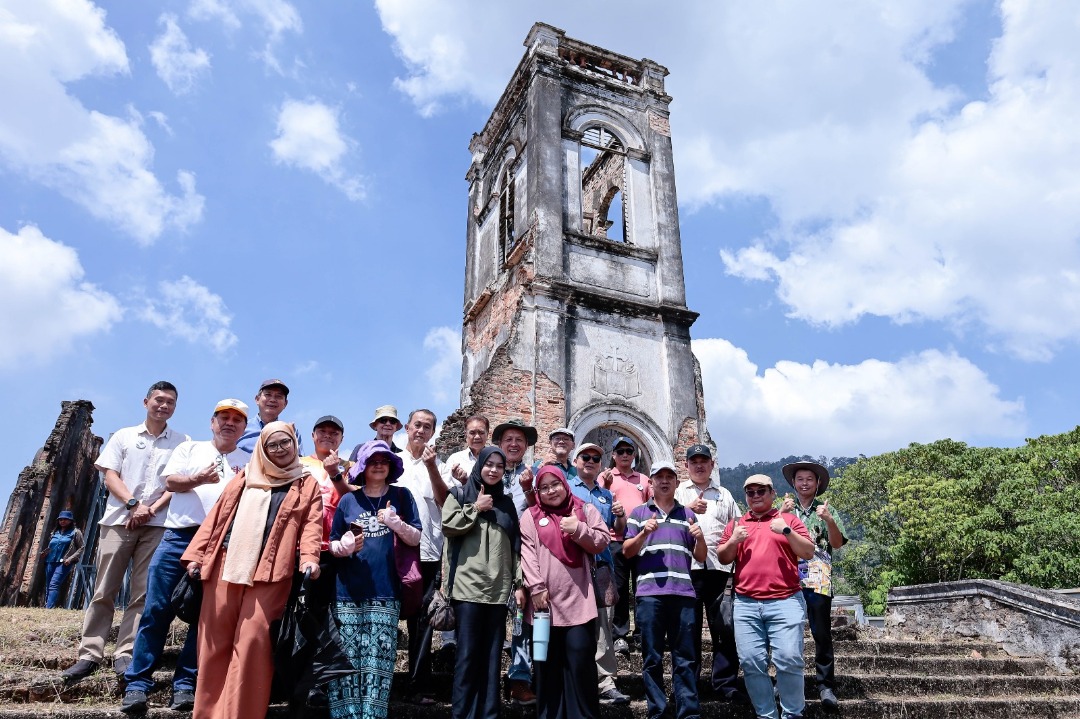
Had quite an interesting Saturday over the weekend. In the morning, I attended a workshop at USM’s Centre for Global Archaeological Research on the history and heritage of Pagar Tras. Pagar Tras, where? Well, it’s a small, abandoned area along the Sungai Lembu road in Province Wellesley, one of the roads linking Bukit Mertajam to Kulim in Kedah. Today, the only visible evidence of its existence is a Catholic cemetery and the ruins of what was once a church.

Back in its heyday, the Sacred Heart Catholic Church was the centre of activity for the Hakka community in Pagar Tras. Built in 1888, it stood for decades until the post-Second World War period when the area became a hotspot for Communist insurgents. In 1952, the British administrators ordered the residents to relocate to the New Villages in Permatang Tinggi, Berapit and Machang Bubok. Some moved to Kulim and other nearby towns. With the community gone, the church fell into disrepair, though its valuable artefacts were salvaged and relocated to a new Sacred Heart Church in Kulim, built in 1957. Over time, the original building deteriorated further—today, all that remains are part of one bell tower, the apse and the sides. The roof has long since disappeared. However, the cemetery is still intact, and every All Souls’ Day, on the second of November, people continue to visit the Pagar Tras cemetery to pay their respects.

This history was shared with us at the workshop, the third organised by Universiti Sains Malaysia. I didn’t do a proper headcount, but there were about 25 participants. Like me, a few had driven in from the mainland. Some were from Machang Bubok and Kulim too, I believe. Other stakeholders included representatives from Penang Heritage Trust, ThinkCity, George Town World Heritage Incorporated and even Alliance Française de Penang. Why the Alliance Française? Likely because the Catholic movement in Penang was deeply tied to French priests, who began preaching here as early as 1787. Catholicism had already gained a foothold in Malacca through the Portuguese, and from there, it spread northwards into Siam, Kedah and eventually Penang.

On the mainland, the centre of Catholicism is St Anne’s Church, with smaller churches in the wider vicinity. I asked around—why weren’t the Pagar Tras artefacts moved to St Anne’s Church instead of across the state border to Kulim? The most plausible answer I received was that the Kulim church was built as a direct replacement for Pagar Tras, so they had first claim to the artefacts.

During the workshop, there was considerable discussion about the architectural influence on the Pagar Tras church. It was believed to have heavy French Gothic elements, inspired by Notre Dame in Paris. However, one participant raised an interesting interpretation—French Gothic architecture typically featured pointed arches, while photos of Pagar Tras showed rounded arches instead. When we visited the ruins later, we could see for ourselves—the windows and arches were all rounded, not pointed. This was an eye-opener. Perhaps the church wasn’t as French Gothic as previously thought. Could it have been more Romanesque instead? This might be something for researchers to ponder.

From Pagar Tras, our final stop was the Kulim Catholic Church, where we were met by the parish priest, Father Henry Rajoo. He gave us a tour of the church, and mounted high on the walls around us were the salvaged artefacts from Pagar Tras, including two stained glass and a massive wooden cross that now occupies pride of place at the altar. We were also shown other priceless artefacts, such as a wooden 
signboard with the Chinese characters 信望愛 (faith, hope and love), liturgical items and a baptism record book that dates back to the early days of Pagar Tras.


Sunday, 23 February 2025

Wu Lien-Teh public lecture


We are very proud to announce Professor Dr Zhong Nanshan as the recipient of the fourth Dr Wu Lien-Teh Award for Leadership in Public Health 2025.

Academician Prof Dr Zhong Nanshan is a renown respiratory specialist from China and he shall deliver his lecture, From SARS to COVID-19: 20 Years' Lessons of Coronavirus Infections. The lecture shall be followed by a Health Forum with Tan Sri Dato' Seri Dr. Noor Hisham bin Abdullah on Pandemic Preparedness-Lessons Learnt and Ways Forward.

We cordially invite you to attend this year's Public Lecture and the award ceremony to celebrate his success in conjunction with Dr Wu Lien-Teh's 147th birthday anniversary.

Details of the Public Lecture
Date: 08 March 2025 (Saturday)
Time: 2:00pm – 5:00pm
Venue: Penang Institute, 10 Brown Road, 10350 George Town
Organisers: The Dr. Wu Lien-Teh Society and Penang Institute

Registration Link:
(For Physical Attendance) https://bit.ly/Zhong-Nan-Shan
(Important Note: There is no live broadcast this year.)

Entrance to this event is FREE. No refreshment will  be provided.

Do come and join us for this inspirational lecture and celebrate Dr Wu's birthday at the Dr Wu Lien-Teh Garden in Penang Institute! 

See you! 

Sincerely yours
The Dr Wu Lien-Teh Society

About Prof Dr Zhong Nanshan:
Professor Dr Zhong Nanshan, 89-years-old, a leading Chinese pulmonologist and epidemiologist, is a global public health champion. He played pivotal roles in controlling the SARS and COVID-19 outbreaks, advocating for transparency and evidence-based approaches. His confirmation of COVID-19's human-to-human transmission was crucial. Dr Zhong's expertise has guided international pandemic responses, emphasising scientific rigour and decisive action. His dedication to public service and respiratory disease research makes him a vital figure in global health, and a worthy recipient of the Dr Wu Lien-Teh Award.

About The Dr Wu Lien-Teh Society Penang:
The Dr Wu Lien-Teh Society Penang preserves the legacy of Dr Wu Lien-Teh, a pioneering Penang-born physician. It raises awareness of his contributions to public health, notably his work combating the Manchurian plague. The society promotes his values: dedication to public service, scientific advancement and public health reform. Through lectures, exhibitions and historical preservation, it educates the public, especially youth, about Dr Wu's impact. The society inspires future medical professionals, ensuring his innovative methods and commitment to global health continue to influence contemporary practices.


Friday, 21 February 2025

ESG workshop

Last Wednesday, my wife and I attended a half-day workshop on the Simplified ESG Disclosure Guide (SEDG), presented by a consulting group. It was part of a larger event, the ASEAN Finance and Central Bank Deputies Meeting. We were almost denied entry as our names weren’t on the attendee list, but after some confusion, the matter was resolved, and we joined a group of about 30 people, mostly from SMEs. Unfortunately, we missed the first hour due to unexpected traffic congestion, but the workshop was simple enough for us to pick up the missing information as we went along. Luckily, there were still three more hours to go.

The workshop turned out to be pretty interesting. ESG gets talked about a lot, and while I could throw around terms like Scope 1 and Scope 2, their definitions never really sank in. But after today, I finally have a proper understanding of what’s required. What I did know before was that ESG is more than just a buzzword—the Securities Commission and Bursa Malaysia place great emphasis on it, and public-listed companies are already required to disclose sustainability-related information in their annual reports. Many of them will have to step up their ESG compliance even more in the coming years.

For SMEs, though, things are a little different. They’re not yet legally required to follow the same ESG disclosure frameworks as public-listed companies, but that doesn’t mean they can ignore it. Big corporations, especially multinationals, are increasingly insisting that their suppliers align with ESG principles. It’s just a matter of time before ESG compliance becomes a must-have for SMEs wanting to do business with them.

Anyway, back to ESG. The E part of ESG—Environmental—is what most of us are generally familiar with. The first thing that comes to mind is energy consumption—the electricity we use to power our offices, businesses, homes, etc. Everyone knows the first step is replacing traditional lighting with LED fittings. But there’s much more to it than just cutting down on electricity bills. ESG also looks at emissions reduction, waste management, water conservation and responsible sourcing of materials. That’s where Scope 1, Scope 2 and Scope 3 emissions come in.

  • Scope 1 covers direct emissions from a company’s own operations, like fuel burned in company vehicles or factory machinery.
  • Scope 2 covers indirect emissions from purchased electricity or energy used by the company.
  • Scope 3 is the tricky one—it includes emissions from a company’s entire value chain, meaning suppliers, customers and even the end use of a product. This is often the biggest part of a company’s carbon footprint, but also the hardest to track and reduce.

The S in ESG stands for Social, and this covers things like human rights, labour standards, employee management, occupational health and safety, as well as diversity and equity. It’s about how companies treat their staff, their suppliers and even their customers. Are workers paid fairly? Do they have a safe working environment? Are businesses actively promoting diversity and inclusion? These are all part of ESG’s social component.

And finally, G stands for Governance, which is all about how businesses conduct themselves. I always knew that submitting proper audited financial reports was important, but I didn’t realise that governance also includes things like leadership transparency and ethical business practices. Companies need to disclose information on their board of directors and senior management, including diversity, independence and conflicts of interest. Then there are things like having a proper code of conduct, anti-corruption policies and whistle-blowing mechanisms—all of which fall under Governance.

The workshop really drilled home the importance of ESG, especially for the SME representatives there. But I can already see the challenges ahead for SMEs trying to implement these guidelines. Tracking emissions, especially Scope 3, won’t be easy. Neither will restructuring policies to ensure full compliance. Still, there’s no escaping it. Eventually, the big industry players will demand ESG compliance before doing business with anyone, and companies that don’t adapt might find themselves left behind.


Sunday, 16 February 2025

Remembering our earliest years

I came across an intriguing article on The Guardian today that delves into why we can’t remember our earliest years. It resonated with a piece I previously wrote on this blog about my own first childhood experiences. While the age at which memories emerge varies across cultures, researchers have long been puzzled by why most people can’t recall experiences from before the age of two or three.

Sigmund Freud introduced the term "infantile amnesia" to describe the inability to recall the earliest years of childhood. Over a century later, psychologists are still puzzled by why most people can’t remember experiences before the age of two or three, even though those experiences shape our lives. While researchers once believed young brains weren’t developed enough to form lasting memories, studies in the 1980s showed that toddlers as young as two can remember events from months earlier. A researcher suggests that these early memories aren’t lost, but stored in the brain and become inaccessible as the hippocampus, the region responsible for memory, undergoes rapid development. This may explain why traumatic early experiences, even if forgotten, still impact mental health later in life. 

Interestingly, the age at which people recall their first memories varies across cultures. Americans, for example, tend to remember things from around 3½ years old, while Chinese people recall memories about six months later. This difference may stem from cultural values. Western cultures emphasise individual identity and personal experiences, while Asian societies focus more on collective activities and relationships. In New Zealand, Māori children recall their earliest memories at around 2½ years old, earlier than their European counterparts. Researchers attribute this to the Māori’s rich oral traditions and the tendency of parents to engage children in detailed storytelling about past events. Also, children who grow up in environments where parents ask open-ended questions and share stories elaborately tend to remember more from an earlier age.

While some people claim to remember things from as early as infancy, experts argue that these ‘improbably early’ memories are more likely shaped by photographs or family stories than genuine recollections. I find this convincing because my own family photos played such a significant role to fill in many gaps in my childhood memories. On my own, I remember very little, but seeing these personal images suggests that yes, I did this or that, or went here or there—creating a kind of false memory of my earliest years. And finally, memory itself isn’t fixed—each time we recall an event, we subtly alter and reinforce it. Although early experiences like a first birthday or first steps may be stored deep in the brain, they remain beyond conscious reach. Yet, these unrecalled memories might still act as a framework for later experiences—like the hidden foundations of a home, quietly shaping how we remember and understand our lives.

The Guardian story can be read here, while my own story appeared here. There isn't a Part Two yet.


Saturday, 15 February 2025

Yin and yang of Chinese temples

Over the Chinese New Year period, I had the occasion to visit several temples, the most important being the Kong Hock Keong, or Kuan Imm Temple, in Pitt Street. It’s always packed during the first few days of the festive season. This year, my family tried visiting on the first of this month, already the fourth day of Chinese New Year, but we were thwarted by road closures in the inner heritage zone, no thanks to the annual CNY beohooi (miaohui, 廟會) celebrations. Traffic was being diverted everywhere except into Pitt Street, also known as the Street of Harmony. But no worries—we made it there eventually. albeit a few days later. On Chap Goh Meh, after my worship session at the Swee Cheok Tong, I did what I always do: walked to Armenian Street to offer prayers at the Poh Hock Seah, the most prominent Tua Pek Kong Temple in the city.

A few days ago, after visiting these and other temples—both on the island and the mainland, including my neighbourhood Tua Pek Kong temple just around the corner—I started wondering: in Chinese geomancy, or hongsui (fengshui, 風水), are temples considered yin or yang places? I guess it depends on the temple’s design and the deities worshipped.

Generally, temples are yang. They’re lively places where people gather to pray, make offerings and perform rituals—all activities that generate strong yang energy. Many temples have open courtyards, bright colours like red and gold, and strong lighting, which only amplify that yang presence. There’s also a deep connection to the Heavens—Taoist and Buddhist temples, in particular, are often built to align with celestial forces, which are naturally yang.

But there’s a darker side too. Yin energy tends to linger in more secluded areas, especially memorial halls dedicated to the dead. Some temples have dark corners or even underground spaces, dimly lit and decorated accordingly, where ghoulish deities of the netherworld—like Tua Yah Pek and Jee Yah Pek—are worshipped. These spaces, being enclosed and shadowy, naturally accumulate yin energy. Then there are temples hidden deep in forests, perched on mountains or sitting right next to cemeteries, with hardly any human activity—places that definitely lean more towards yin.

That said, I’d say most Chinese temples in Penang are predominantly yang, though they aim to strike a balance between yin and yang for spiritual harmony.

As an addendum to the above story, I must emphasise that the Tua Pek Kong (大伯公) and Tua Yah Pek (大爺伯) are completely different deities with distinct roles in Chinese folk religion.

Tua Pek Kong is a widely revered Earth Deity, often considered a guardian of communities, businesses and the general well-being of people. He is associated with prosperity, protection and landownership. Many temples and shrines are dedicated to him, such as the Poh Hock Seah in Armenian Street.

On the other hand, Tua Yah Pek is one of the Underworld Guardians, alongside Jee Yah Pek (二爺伯). He works under the King of Hell (Phor Tor Ong or Tai Su Yah, 大士爺) and is responsible for guiding and escorting spirits of the deceased to the afterlife. His counterpart, Jee Yah Pek is often depicted in white robes, while Tua Yah Pek is in black. Both grotesque figures, if I'm not mistaken, spot long tongues that reach down to the waist or knees.

Essentially, Tua Pek Kong is a benevolent deity associated with prosperity and protection, while Tua Yah Pek is a fearsome underworld enforcer responsible for the dead.


Friday, 14 February 2025

Ending my chap goh meh

Shhh… don’t tell the Penang state government, but Chap Goh Meh was over two days ago. It’s already chap chhit meh (the seventeenth night), yet they’re still going ahead with their orange-throwing event at the Esplanade this evening! Well, to each their own, I suppose.

As for me, Chinese New Year ended two nights ago with a dinner hosted by the Nandaka Vihara meditation society to appreciate its committee members, volunteers, helpers, and workers. As with all meals at Nandaka Vihara, it was a buffet—tables laden with food, and people moving along, picking out what they wanted. But the highlight of the evening was the unique way yee sang was served. With just one large plate to share among 50-odd people, the usual tossing wouldn’t have been practical. So, someone had the bright idea of tying a long piece of string to the plate and pulling it along four or five tables, allowing everyone to toss the yee sang as it passed by. It worked brilliantly, and everyone had their moment of fun, flinging the ingredients as high as possible.

Meanwhile, the monks at Nandaka Vihara kept a respectful distance from the celebrations. However, the Chief Monk, Dhammasubho, was invited at the start of the gathering to share merits with those present.

Earlier in the day, I had visited the Swee Cheok Tong for our annual Chap Goh Meh worship, a tradition our Quah Kongsi observes every year. The session is always well attended by most of the Trustees and Committee Members. For the past decade or so, I’ve also made it a personal ritual to stop by the Poh Hock Seah, or Tua Pek Kong temple, in Armenian Street after the Kongsi worship. As usual, the area was packed with tourists, but I kept to my routine—slipping quietly into the temple, offering my prayers and leaving without fuss.

So now with Chap Goh Meh ended, the next Chinese festival to look forward to will be Cheng Beng which shall fall on the fourth day of April.


,p.


Thursday, 13 February 2025

Northern drums

For me, this year’s Chinese New Year is well and truly over. Another 15 days have flown by, preceded by nearly a month of intense house-cleaning, all thanks to my wife’s initiative. Back-breaking work for me, especially since I’m not getting any younger. I was about to take down the Chinese New Year banners from the main door, but she suggested leaving them up for a couple more days. No rush, she said. Fair enough—after all, the Penang state government isn’t wrapping up their Chinese New Year celebrations until this Friday.

At the Esplanade, the festivities will culminate with the Chap Goh Meh orange-throwing event… except it won’t be Chap Goh Meh this year but Chap Chhit Meh. A new trend in the making? A rewrite of Chinese tradition? All because Thaipusam fell on the eve of Chap Goh Meh, and concerns over traffic congestion took priority. Blah, blah, blah. I just hope everything returns to normal next year, and more importantly, that this Chap Chhit Meh business doesn’t set a precedent. Indeed, no!

One of the highlights of this year’s Chinese New Year was the festive dinner organised by the Ministry of Human Resources in collaboration with the Social Security Organisation (SOCSO) in Bukit Mertajam on the seventh of February. Hosted by local boy and Human Resources Minister Steven Sim, the event was attended by Penang Chief Minister Chow Kon Yeow. In my books, it was a well-organised affair. While the main dishes were served in the traditional nasi hidang style, several food stalls at the back of the hall dished out halal versions of char koay teow, udang cucuk, dragon beard candy, and more. The main guests arrived to the explosive din of firecrackers, setting the stage for a thrilling performance by the Northern Drum troupe, whose powerful beats added to the festive atmosphere. The video of their performance appears at the end of this story. Meanwhile, view the pictures I took of the event first.


Wednesday, 12 February 2025

Now, really 100 percent!

I was at Nandaka Vihara tonight, celebrating chap goh meh over dinner with the committee members and other volunteers. As we left, instinctively, I turned my head to search for the full moon. And there it was—a 100 percent illuminated at 9:17pm, shining brightly and clearly. A few others joined me, pausing to marvel at its brilliance, gasping in sheer wonder.


Tuesday, 11 February 2025

Moon reaching 100%

The full moon at 9:17pm tonight—illuminated at 99.1%. Technically in exactly 24 hours, it’ll attain 100%, the true Chap Goh Meh moon in all its splendour. But for now, the view will have to wait—I’ve no idea what the weather will be like tonight.


Sunday, 9 February 2025

Annual CNY lunch

Just wrapped up our annual Chinese New Year lunch at home with most of my in-laws. As always, we only made the too-tor soup—which took the whole morning to prepare—and catered the rest. This year, we picked two dishes from Zui Xiang Lou in Machang Bubok and another two from Kerala Spice Kitchen in downtown Bukit Mertajam.


Saturday, 8 February 2025

Locked in, locked out

Little mundane mishaps can happen to anyone. When they do, they’re frustrating in the moment—but if they end well, they make for a good laugh. Take my experience just two days ago.

I got a taste of what it’s like to be locked in. The night before, my wife drove home and left the door key inside the car since the front door was already open for pai tnee kong worship. The next morning, when she left for an event at the temple, she accidentally took the spare front door key as well. When it was my turn to leave, I couldn’t find the key anywhere. That’s when it hit me—I was stuck, locked in! Too late for her to turn back, and I had no way out. In desperation, I searched the house high and low until, finally, I found another set of spare keys. Now, I really need to make sure they’re easier to find next time.

As for being locked out, well, that didn’t happen to me—but to my neighbour yesterday. His family had left for Kuala Lumpur, leaving his brother-in-law behind to house-sit for the weekend. Barely half an hour later, they realised they’d forgotten something and swung back home. Meanwhile, the brother-in-law had wandered into the side garden to do some tidying up. Without realising he wasn’t inside, they locked the front door and took off again. So that fella was well and truly locked out. But lucky for him, he spotted my wife and got her to call the family. So, back they came—again—to let him in.

Funny how these little accidents can turn into amusing stories. At least, after the fact!

Friday, 7 February 2025

Pai tnee kong 2025

The ninth day of the first Chinese lunar month is a big deal for the Hokkien community in Penang. Some even say it’s more important than the first day of Chinese New Year. A day of gratitude and reverence to mark the moment their ancestors escaped a massacre. Legend has it that they survived thanks to the Jade Emperor, the God of Heaven. To this day, Hokkiens honour the occasion with grand celebrations and worship. 

One story traces back to the Ming Dynasty. It was the 16th century and coastal trade was booming. But along with prosperity came the pirates who raided villages along China’s eastern coast. On the first day of a Chinese New Year, a ruthless band of marauders attacked a Hokkien settlement in Fujian, killing indiscriminately. The villagers fled into a nearby sugarcane plantation and prayed to the Jade Emperor for protection. For days, they remained out of sight, the tall stalks shielding them from view. On the ninth day, the pirates gave up and left. Emerging from the plantation, the Hokkiens rejoiced and offered thanksgiving prayers. Subsequently, the practice of Pai Tnee Kong (praying to the Jade Emperor) took on the deeper significance of survival and divine protection.

Preparations usually begin in the morning of the eighth day of Chinese New Year. Families flood the markets before dawn to pick up essentials. Among the most important—long stalks of sugarcane that symbolises resilience, protection and sweet fortune. A whole roast pig, a symbol of abundance, often takes centre stage for those who can afford one while the offering table overflows with traditional sweetmeats like the ang koo (red tortoise cakes), bee koh (glutinous rice pudding), huat kueh (steamed cupcakes that "bloom" for good luck), mee koo (bright pink steamed buns), tnee kueh (sweet sticky rice cake), miniature sugared pink pagodas, fresh fruits and flowers. Each item carefully chosen, each one carrying its own symbolic meaning.

By 11pm, when the Chinese lunisolar calendar marks the start of a new day, families begin their prayers. The offering table, often raised on stools or benches to be closer to heaven, is meticulously arranged. The sugarcane stalks are tied to the table's front legs. A pineapple, or ong lai (meaning prosperity comes), sits prominently on the table, often decorated with red paper cuttings for extra luck. Some families buy kim chua pineapples, carefully folded from gold-stamped paper into intricate shapes.

One of the night’s most striking rituals is the burning of gold-stamped paper, or kim chua, folded into the shape of ancient ingots. As the fire consumes the offerings, sugarcane stalks from the altar are added to the flames, a final act of thanksgiving. The celebrations culminate in a thunderous barrage of fireworks and firecrackers, their deafening explosions believed to drive away evil spirits and welcome good fortune.

That’s how my family used to celebrate Pai Tnee Kong when we were still living in Seang Tek Road. My grandmother made sure everything was in place, with my mother, aunt and even her siblings chipping in. By 10 or 10.30pm, the whole family would gather. The main table from our front hall carried out onto the five-foot way, decorated with sugarcane stalks tied to its legs. No whole roast pig for us, though—just a generous cut of roast pork, along with boiled chicken and roast duck. That’s how I remember it.

Then, sometime in the 1960s, the tradition came to an abrupt stop. My grandmother’s brother-in-law advised against continuing after a terrible accident downtown. A crash, a fire, ashes covering some families’ offerings—it was a bad omen, he said, and it had happened on the night of Pai Tnee Kong. From then on, our celebrations were much quieter. No more raised tables on benches, no elaborate altars. Just a few offerings—fruits, huat kueh—placed on the small, permanent Jade Emperor’s altar. But one thing never changed: we still burned kim chua to conclude our prayers.

So, according to the Chinese lunisolar calendar, Spring is finally here!


Thursday, 6 February 2025

CNY party @ OFA

Last Sunday, I found myself with a last-minute ticket to the Chinese New Year party at The Old Frees' Association. Initially, I had been told that I was too late to register and was placed on the waiting list. Then, just a day or two before CNY, I got a message—a seat had opened up. Would I still be interested?

At first, I thought no, as my family had planned to visit relatives and friends that day. But as luck would have it, my wife rescheduled our visits to the day before to accommodate an old family friend. So, in the end, I was free to attend the CNY@OFA party after all.

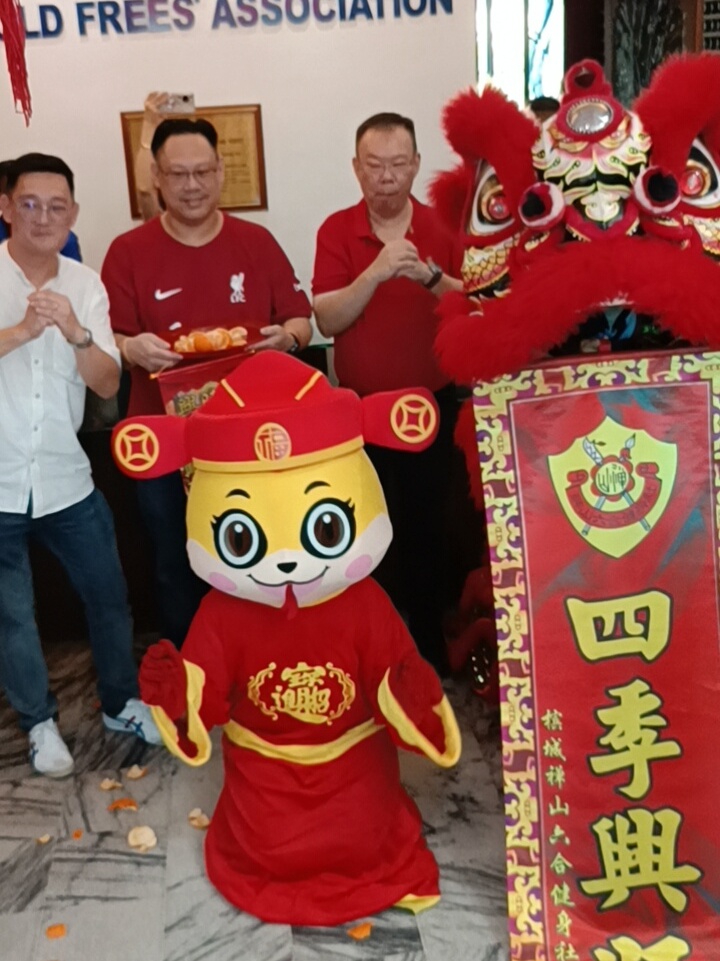
The celebrations kicked off around 5pm with a string of firecrackers, followed by a lively lion dance performance that lasted about half an hour. The troupe moved from the main entrance to the natuk kong shrine at the far end of the car park before making its way into the main building—ascending the staircase to the lounge, then down into the hall, and finally culminating in a vibrant display of Chinese New Year exuberance at the reception area. Along the way, they captivated members and their families, especially the youngsters.

After the excitement, there was a short breather before the buffet spread was opened. Everyone enjoyed themselves thoroughly, and by 7.30pm, I decided to call it a day.

These photos below were taken from The Old Frees' Association's facebook page, Liong Chian Min as well as my own mobile.